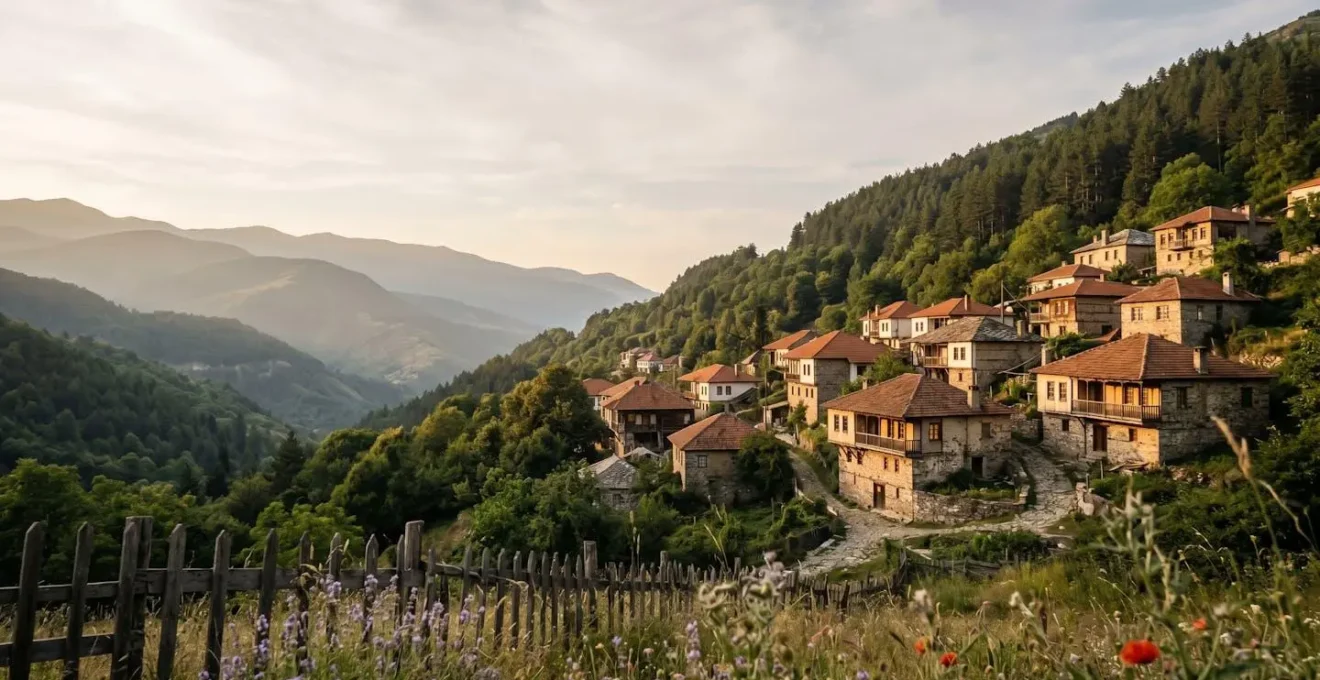
The most authentic Macedonian eco-stays aren’t found on booking websites; they are social contracts based on a deep cultural tradition of hospitality called gostoprimstvo.
- “Eco-tourism” here means supporting a family’s livelihood, not just finding a hotel with a green label.
- Finding these places requires using local search terms, asking locals, and being ready to embrace a stay without Wi-Fi.
Recommendation: Shift your mindset from being a “customer” to being a “guest.” The most valuable part of your stay won’t be the room, but the connection you build with your host family.
You’ve seen the pictures: pristine mountains, serene lakes, and quiet villages that seem untouched by time. You’re searching for an escape, a real connection with nature and culture, far from the crowds and commercialism. You type “eco-tourism North Macedonia” into your search bar, hoping to find that perfect, authentic rural stay. What you likely find is a mix of hotels near national parks or curated tours that feel a bit too polished. It’s a good start, but it might leave you wondering if you’re missing the true heart of the Macedonian countryside.
Many guides will point you toward the main hubs, suggesting activities and foods that are wonderful in their own right. But they often miss a crucial point. True rural immersion in Macedonia isn’t just about what you do; it’s about *how* you do it and *who* you do it with. What if the key to an authentic experience wasn’t in finding a place with an “eco” certificate, but in understanding the unwritten rules of local hospitality and daring to go offline?
This guide is written from my own little corner of a Macedonian village. It’s for the traveller who wants to go a layer deeper. We’ll explore what “eco-tourism” truly means here, how to find the welcoming homes that aren’t on any app, and what small gestures make the difference between being a tourist and being a welcome guest. We’ll also look at the amazing things you can do when you embrace the local rhythm, from the forests of Mavrovo to the hills of Berovo.
To help you navigate this journey, this article is structured to answer your most pressing questions. The following summary outlines the key topics we will cover, from decoding local customs to finding hidden gems.
Summary: Your guide to authentic rural Macedonian stays
- What Does “Eco-Tourism” Actually Mean in the Macedonian Context?
- Which Rural Stays Are Not Listed on Booking.com and How to Find Them?
- Can You Survive a Rural Stay Without Wi-Fi or Hot Water?
- The Behaviour Mistake That Offends Rural Macedonian Hosts
- What Activities Can You Do During a 3-Day Rural Stay Near Berovo?
- What Does “Eco-Tourism” Actually Mean in the Macedonian Context?
- Can Tourists Join Lynx Monitoring Expeditions in Mavrovo?
- Why Is Mavrovo’s Forest Density Perfect for Wildlife Observation?
What Does “Eco-Tourism” Actually Mean in the Macedonian Context?
When you hear “eco-tourism,” you might think of solar panels, water recycling, and official green certifications. Here in the Macedonian countryside, the concept is far more grounded and, I believe, more profound. It’s less about marketing labels and more about economic survival and cultural preservation. For many small communities, welcoming guests is a way to create a sustainable livelihood that allows them to remain on their ancestral land, protecting the very nature that visitors come to see.
A perfect example is what’s been happening in the Bregalnica region. A Nature Conservation Project, with some help from the Swiss, focused on supporting rural entrepreneurs. Instead of building fancy eco-hotels, they helped people like Antonio from Kladence Apiary create experiences. Now, visitors can learn about beekeeping, taste honey, visit a sheep farm, and see conservation in action. This is the essence of it: your visit directly supports a family and gives them a reason to protect their environment. As the project led to the creation of Protected Areas in Osogovo and Maleshevo, it proves that agri-tourism can be the engine for both economy and ecology.
So, when you choose a rural stay here, you’re not just booking a room. You’re becoming part of a fragile, grassroots ecosystem. You’re validating a way of life that values nature not as a commodity, but as a home. It’s a powerful exchange that goes far beyond a simple financial transaction.
Which Rural Stays Are Not Listed on Booking.com and How to Find Them?
This is the golden question, isn’t it? The most memorable stays are often with hosts who wouldn’t even know how to list their home on a major platform. They’re not in the “hospitality business”; hospitality is simply their way of life. Finding them requires a little bit of old-fashioned detective work and a willingness to step off the beaten digital path. This is where the real adventure begins, long before you arrive.
The key is to tap into the local, unlisted network. Forget your usual search terms. Instead, you need to think like a local. Using Macedonian phrases on Google.mk or, even more effectively, on Facebook, can unlock a hidden world. Look for community groups for specific villages or regions; they are often managed by diaspora members who are more than happy to help a polite visitor find a welcoming home. Don’t be afraid to ask for a “добар domaćin” (good host)—it’s a term of high praise.
Once you’re here, your best guides are the people themselves. Taxi drivers, the owner of the local kafana (café-bar), or the person at the village shop often know everyone. These informal networks are far more powerful than any algorithm. It is this human connection that defines the experience from the very start. Alternatively, you can contact small, sustainable tour operators who have spent years building relationships with these families. They can arrange homestays and farm-to-table dinners that are completely off the mainstream grid.
Your action plan: Finding your unlisted Macedonian host
- Search online using Macedonian terms: Start with ‘селски туризам’ (rural tourism) and ‘сместување во село’ (village accommodation) on Google.mk and Facebook.
- Connect with village communities: Join Facebook groups for specific regions (like Prespa, Berovo) and post a polite inquiry in English about family-run places.
- Ask locals upon arrival: In a regional town, ask a café owner or shopkeeper for recommendations for a ‘добар domaćin’ (good host).
- Consult specialized operators: Contact local tour companies focused on sustainability; they have deep connections with families not on booking platforms.
- Investigate village-led initiatives: Look for places like Brajčino village, which have developed their own community-based tourism models.
Can You Survive a Rural Stay Without Wi-Fi or Hot Water?
The short answer is yes, absolutely! But it requires a small shift in perspective. The absence of constant connectivity or instant hot water isn’t a flaw in the experience; in many ways, it is the experience. It’s an invitation to disconnect from the digital world and reconnect with your surroundings, your host, and even yourself. It’s about embracing “productive inactivity”—the simple joy of a long conversation over coffee, without a phone in sight.
It’s important to be realistic. In many rural areas, infrastructure is limited. There’s a reason you see so much pristine nature; it’s because development has been slow. This can mean patchy electricity, water heated by a wood stove, and a digital detox whether you planned one or not. In fact, assessments of responsible tourism show that waste management is a challenge, with more than 1,000 illegal dumpsites existing in rural areas. This isn’t to scare you, but to frame the context: your stay supports communities that often lack basic state services we take for granted.
Surviving—and thriving—is all about preparation. Instead of worrying about what you’ll be missing, focus on what you can bring to enhance the experience. A few low-tech items can make a world of difference:
- A powerful power bank is essential for keeping your phone charged for photos and emergencies.
- A good headlamp is non-negotiable, as village nights are darker and more beautiful than you can imagine.
- A small, thoughtful gift from your home country (specialty coffee, a local craft) is a wonderful gesture of appreciation.
- A Polaroid camera can be magical. Gifting an instant photo to a host who may not have a printer creates a beautiful, tangible memory and bridges any language gap.
- Finally, a deck of cards and a notebook are your best friends for bonding with the family and jotting down the priceless things you’ll learn.
The Behaviour Mistake That Offends Rural Macedonian Hosts
There is one cultural mistake that, while well-intentioned, can cause genuine offence to a rural Macedonian host: treating their home like a hotel. This is the place where the concept of gostoprimstvo, or hospitality, becomes so important to understand. It’s a cornerstone of our culture, an honour code that dictates a host must go above and beyond for their guest. Your arrival is not a business transaction; it’s the beginning of a temporary relationship.
The biggest manifestation of this is around food and drink. Your host will offer you something—coffee, rakija (our strong fruit brandy), a piece of cheese—almost as soon as you step through the door. Politely refusing, perhaps because you’re not hungry or you don’t drink, can be misinterpreted. It’s not seen as you declining a drink; it’s seen as you declining their gesture of welcome, their honour. The trick is to accept, even if you only take a small sip or a tiny bite. It’s the act of acceptance that matters.
This is beautifully captured in a cultural guide, which notes that hospitality, or gostoprimstvo, is a cornerstone of Macedonian culture, with locals renowned for their warmth and generosity. The social dynamic of a meal is a perfect example.
Macedonian hosts expect visitors to accept hospitality offerings as part of the cultural exchange, not just a transaction. Meals often last at least two hours as socialization is integral. Refusing food or drink repeatedly can be perceived as rejecting the host’s family honor. Guests should expect to be offered more servings than prepared to eat and may have to politely insist fullness multiple times. The cultural expectation is that treating a stay like a hotel – paying and disappearing into your room – constitutes a major faux pas, as hosts anticipate conversation and connection as part of the exchange.
– Cultural Etiquette Guide, SBS Cultural Atlas
The mistake, therefore, is retreating to your room after you’ve paid. Your host expects and hopes for conversation, for connection. They want to hear about your home as much as you want to learn about theirs. By giving your time, you are giving them the greatest compliment.
What Activities Can You Do During a 3-Day Rural Stay Near Berovo?
A 3-day stay in a region like Berovo isn’t about ticking off a list of attractions. It’s about immersing yourself in the rhythm of the seasons and the land. The “activities” are often the daily chores and traditions of your host family, and being invited to participate is a true privilege. The Maleshevo Mountains, with their high altitude and dense forests, offer a unique calendar of experiences.
Berovo Adventure: Nature as Infrastructure
The area around Berovo Lake shows how to build on nature’s gifts. An eco-focused company, Berovo Adventure, has helped mark five hiking trails and a 45km path, making the stunning landscape more accessible. With 52% forest coverage, the region is a paradise for mountain biking, kayaking, and swimming. But the real draw is what the forest provides: seasonal mushrooms and herbs. The “infrastructure” here isn’t just trails; it’s the ancient knowledge of what to forage and when, which local guides are eager to share.
Depending on when you visit, your days could be filled with completely different, yet equally authentic, tasks. Each season offers a unique way to connect with the local way of life:
- Spring (April-May): This is a time of awakening. You could find yourself foraging for wild herbs and mushrooms in the blossoming pine forests, learning how to prepare traditional mountain tea from plants you helped gather.
- Summer (June-August): The air is warm and the days are long. You might participate in the honey harvest, swim in the glassy waters of Berovo Lake at sunrise, or help collect berries for making slatko, our beloved fruit preserve.
- Autumn (September-October): This is the season of harvest and preservation. You could join the potato harvest, a staple of the region, or witness the incredible process of making ajvar (our famous red pepper paste), or even assist in the distillation of homemade rakija from the fruit harvest.
- Winter (November-March): The pace slows down. It’s a time for indoor skills: learning to bake bread in a wood-fired oven, mastering food preservation techniques, or simply practicing that ‘productive inactivity’—sharing stories and coffee on the porch for hours.
These aren’t package tours; they are invitations. Your “activity” might be an hour of helping in the garden, which earns you a three-hour meal filled with stories and laughter. That’s the beautiful, unbalanced equation of Macedonian hospitality.
What Does “Eco-Tourism” Actually Mean in the Macedonian Context?
Now that we’ve seen how eco-tourism works on the ground, it’s important to understand the philosophy driving it. It’s not a top-down corporate initiative; it’s a bottom-up movement fueled by passion. It’s about a conscious choice to protect what makes this land special, often in the face of pressures to modernize or develop in unsustainable ways. This is where the “eco” in eco-tourism finds its soul.
It’s not about being anti-development. It’s about pro-Macedonia development. It’s a quiet rebellion against the idea that the only way forward is to build large, impersonal resorts. Instead, it champions a model where tourism revenue directly funds the protection of biodiversity and cultural heritage. Your stay in a village house contributes more to conservation than you might think, by proving that a standing forest is more valuable than a cleared one.
This is a battle for the heart and soul of the country, fought by a dedicated few who see the long-term value of their natural inheritance. As one of the pioneers in this field puts it:
It’s NGOs, ecological activists and small tour companies like us that are trying to change the public conscious.
– Goran Janevski, Responsible Travel North Macedonia Guide
This quote is crucial. It highlights that the authentic eco-tourism you are seeking is the result of a deliberate, ongoing effort. It’s an active choice, not a passive state. By choosing this type of travel, you are casting a vote. You are supporting the people who are working to ensure that the bears, lynxes, and diverse flora of these mountains have a future. You become a partner, not just a spectator, in the conservation of Macedonia’s wild soul.
Can Tourists Join Lynx Monitoring Expeditions in Mavrovo?
The idea is incredibly romantic: tracking the elusive Balkan lynx, one of Europe’s most endangered and beautiful predators, through the primeval forests of Mavrovo National Park. While this vision fuels the imagination of many wildlife lovers, the reality on the ground is a bit more complex. Direct, organized “lynx monitoring expeditions” for tourists are not a common or established offering in Macedonia.
The reason for this is conservation itself. The Balkan lynx population is critically small, and protecting the animals from any form of disturbance is the absolute top priority for biologists and park authorities. The focus is on research and protection, which is a sensitive, year-round job. While your tourist dollars help fund the park and general conservation, access to the core monitoring programs is rightly restricted to scientific teams.
However, this doesn’t mean you can’t experience the wild heart of Mavrovo. The region’s value for wildlife is immense, as the Good Travel Guide notes, “North Macedonia’s mountainous northwestern regions feature extensive forests with diverse vegetation providing habitats for bears, lynxes, and numerous bird species…” This habitat is the real star. Rather than seeking a guaranteed lynx sighting, the true eco-tourist experience is in learning to read the signs of the forest and understanding this critical ecosystem. Hiring a local guide who can show you tracks, explain the habitat, and share stories of the forest is a far more authentic—and ethical—way to connect with the spirit of the lynx.
Your journey becomes one of supporting the habitat that the lynx depends on. Every visit to a national park, every fee paid, and every local guide hired contributes to the broader conservation effort that keeps this sanctuary intact. So while you may not be radio-collaring a lynx, you are very much a part of its survival story.
Key takeaways
- True Macedonian eco-tourism is a social and cultural exchange, not a commercial transaction.
- The most authentic rural stays are unlisted; find them by using local language and asking people directly.
- Embrace the lack of amenities like Wi-Fi as a feature, not a bug, and prepare for a low-tech, high-connection experience.
Why Is Mavrovo’s Forest Density Perfect for Wildlife Observation?
While seeing a large animal like a bear or lynx is rare and a matter of luck, Mavrovo National Park is a world-class destination for wildlife observation. The secret isn’t about open plains and easy sightings; it’s about the incredible density and integrity of its forests. This is what makes it a perfect, living laboratory for understanding a complete European ecosystem.
Mavrovo’s forests are not fragmented patches; they are vast, contiguous, old-growth sanctuaries. This unbroken canopy serves as a critical part of a larger Balkan “wildlife corridor,” a safe passage for pressure-sensitive species. Unlike many other parts of Europe, this provides a true refuge. The sheer diversity within the forest is key. You have vast beech forests providing nuts and seeds for bears, which in turn supports a healthy prey base for predators. This creates a complete, functioning food web that is rare to find.
Mavrovo National Park: A Refugium for Wildlife
The park’s ecological value comes from its role as a sanctuary. As highlighted in guides like the Good Travel Guide, the mix of dense beech forests at lower altitudes and coniferous forests higher up provides a complete range of habitats. This allows species from wild boar to the critically endangered Balkan lynx to thrive. The country’s commitment to protecting these pristine landscapes in Mavrovo and the Shar Mountains makes it a haven for nature enthusiasts focused on “sign tracking”—reading the stories left behind in claw marks, tracks, and trails—rather than just visual encounters.
This is why wildlife observation here is so special. It’s not about passive viewing. It’s about active learning. It’s forensic. A local guide won’t just point out a bird; they will show you the claw marks on a tree, a patch of fur caught on a branch, or the distinct print of a wolf in the mud. You learn to read the hidden language of the forest. The density provides cover for the animals, making them feel secure, but it also preserves the clues they leave behind for the patient observer to find.
By shifting your focus from seeing an animal to understanding its home, you will discover the true magic of Mavrovo. This change in perspective is the final, and most important, step in becoming a true eco-tourist in Macedonia. Your journey is now complete, and the real adventure can begin. To put these ideas into practice, the next logical step is to start your search, reach out to a local host, and prepare for an unforgettable cultural exchange.