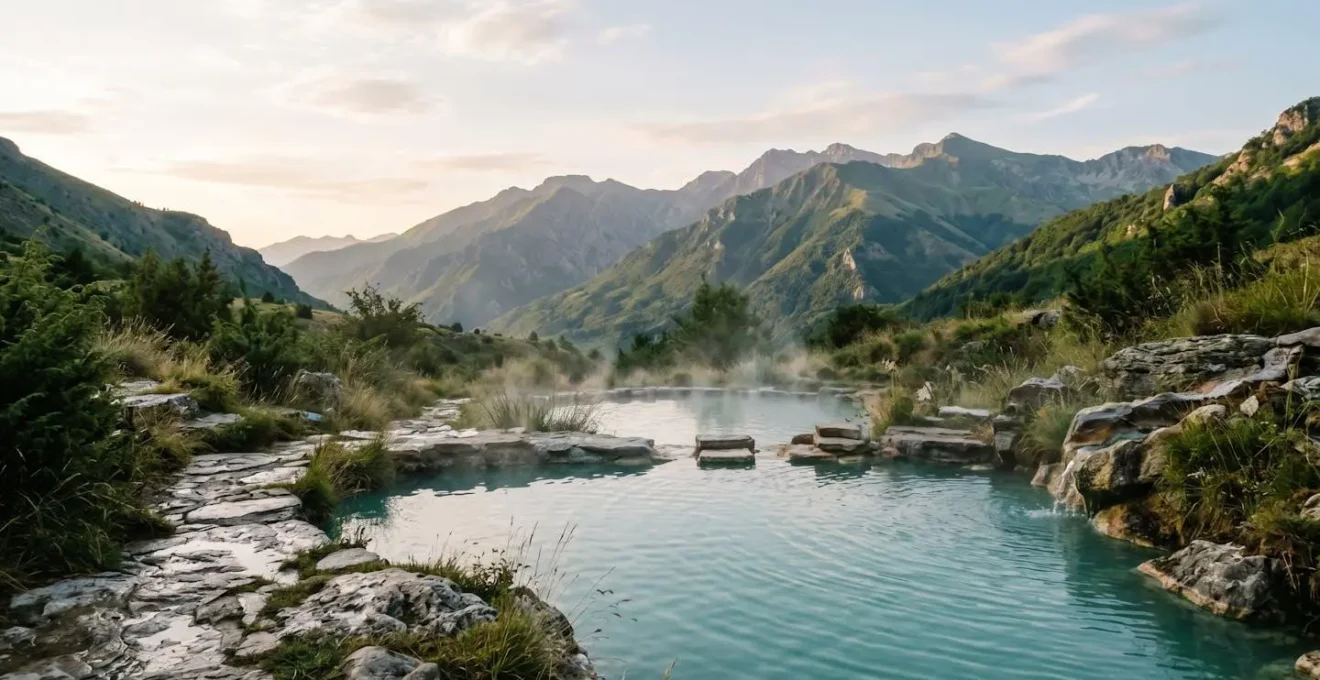
True relaxation in North Macedonia isn’t found by chance; it’s achieved through a strategic recovery plan that blends ancient traditions with modern needs.
- The country’s most profound wellness experiences are rooted in natural thermal waters and historic hamam rituals, offering a genuine “physiological reset” for the weary traveler.
- Maximizing tranquillity requires tactical planning, from choosing the right type of spa (hotel vs. day spa) to visiting at off-peak times to avoid crowds.
Recommendation: For the most restorative journey, combine active exploration like mountain hiking with a targeted evening spa session, focusing on traditional treatments that address physical and mental fatigue.
After days of exploring the vibrant streets of Skopje, hiking the majestic peaks of Mavrovo, or tracing history around Lake Ohrid, the modern traveler often carries more than just souvenirs. There’s a particular weariness that sets in—a blend of tired muscles and an overstimulated mind. The common response is to seek a generic massage or a dip in a hotel pool. But these are often just fleeting distractions, not deep, restorative experiences.
What if the key to truly unwinding in North Macedonia lies not in simply finding a spa, but in understanding its soul? The country’s wellness heritage is a rich tapestry woven from Roman thermal baths, Ottoman hamam rituals, and potent mountain botanicals. True relaxation here is not a passive activity but an active engagement with centuries of healing wisdom. It requires a more thoughtful approach than simply booking the first available appointment.
But if the real secret isn’t just about finding a spa, but about crafting a strategic wellness experience, how do you do it? The answer lies in shifting your perspective from a simple consumer of services to a curator of your own tranquillity. It involves knowing which questions to ask, when to seek solitude, and how to embrace rituals designed for a profound physiological and mental reset.
This guide is designed to be your professional consultant, helping you navigate North Macedonia’s wellness landscape. We will explore the power of its natural thermal waters, decode the value proposition of different spa types, and reveal the secrets to planning a perfect day of active recovery. Prepare to transform your understanding of relaxation from a mere luxury to a cornerstone of your travel experience.
To help you orchestrate your ideal wellness journey, this guide breaks down the essential components of a truly restorative Macedonian spa experience. From understanding the natural resources to mastering the art of timing, each section provides the insights you need to make informed, soul-soothing choices.
Summary: How to Find Your Perfect Wellness Spa Experience in North Macedonia
- Which Spas in Macedonia Use Natural Thermal Waters?
- What Traditional Macedonian Treatments Should You Try at a Spa?
- Hotel Spa vs Day Spa: Which Offers Better Value in Skopje?
- The Peak Hour Mistake: When to Visit a Spa for Maximum Tranquillity?
- How to Plan a Day That Combines Mountain Hiking and Evening Spa?
- Which Spas in Macedonia Use Natural Thermal Waters?
- Why Is the Scrubbing Ritual in a Hamam Good for Traveler’s Fatigue?
- How to Experience an Authentic Hamam Treatment in Skopje?
Which Spas in Macedonia Use Natural Thermal Waters?
The foundation of North Macedonia’s wellness identity is not built on modern fads, but on the very earth itself. For millennia, natural thermal and mineral waters have bubbled to the surface, creating oases of healing sought by emperors and travelers alike. Understanding this legacy is the first step in choosing an authentic spa experience. These are not just warm pools; they are complex hydro-geological phenomena, each with a unique mineral composition and a history of therapeutic use. From the Roman era to the Ottoman period, these waters were recognized for their restorative properties, a testament to their enduring power.
The country is home to several geothermal hotspots, with each source offering a distinct profile. For instance, water temperatures range from 73°C at Banjsko to 40.5°C at Katlanovo. This variation is significant, as different temperatures and mineral contents—such as sodium, calcium, and sulfates—are suited for different therapeutic purposes, from treating rheumatism and skin conditions to simply easing muscle tension after a long journey. A spa that genuinely uses these waters is offering more than just heat; it is offering a direct connection to the region’s natural healing energy.
The Katlanovo Spa, located just 25 km from Skopje, serves as a prime example of this living history. In use since at least 340 AD, its springs were valued by Romans and Byzantines. Emperor Justinian I is even said to have declared, “Katlanovo is the boiler where the sun is born.” This is not mere folklore; it speaks to the profound, almost sacred, respect these natural resources commanded. Today, the facility operates as a modern medical spa, treating a wide range of ailments by bridging this ancient tradition with contemporary science. Choosing a spa with such a deep-rooted history ensures your experience is grounded in temporal authenticity and proven efficacy, transforming a simple bath into a dialogue with history.
What Traditional Macedonian Treatments Should You Try at a Spa?
While modern wellness menus can be overwhelming with their exotic-sounding treatments, the most authentic Macedonian experiences are often characterized by a refined simplicity. The focus is less on elaborate, multi-step procedures and more on the quality and provenance of the ingredients. Many local spas pride themselves on using classic massage techniques enhanced by herbs and oils sourced directly from the surrounding mountains. This approach reflects a deep-seated belief in the healing power of nature, a philosophy that has been passed down through generations.
As you peruse a spa menu, look for treatments that highlight local botanicals like rosehip, St. John’s Wort, or mountain thyme. These are not just fragrant additions; they are chosen for their specific therapeutic properties, such as anti-inflammatory, soothing, or revitalizing effects. As a local wellness expert from My Guide Macedonia notes, the approach may seem less dramatic than in Western spas, but it is deeply effective: “Aromatherapy isn’t as flashy as in Western spas, but the natural scents of mountain herbs often do the trick naturally.” This understated confidence in local resources is a hallmark of an authentic experience.
Beyond massages, inquire about traditional poultices or scrubs that use these native herbs. A warm herbal compress applied to tired muscles can provide immense relief after a day of hiking. Similarly, a body scrub using local salt or ground seeds mixed with herbal oils can exfoliate travel-worn skin while delivering a potent dose of natural nutrients. By choosing these treatments, you are not only caring for your body but also connecting with the landscape in a uniquely intimate way. This is the essence of strategic recovery—selecting therapies that are deeply attuned to the local environment and its healing potential.
Hotel Spa vs Day Spa: Which Offers Better Value in Skopje?
In a city like Skopje, the choice between a hotel spa and a dedicated day spa is a crucial one that directly impacts the value and quality of your relaxation. This isn’t just a matter of price, but of convenience, atmosphere, and expertise. Each model offers a distinct proposition, and the “better” choice depends entirely on your priorities as a traveler. Are you seeking seamless convenience as part of a romantic getaway, or are you a spa connoisseur in search of a curated, tranquil sanctuary?
As a guest at Hotel Panoramika shared, the convenience of having a spa steps from your room is a primary benefit of the hotel model. Facilities are often modern, and access may be included with your stay. However, this convenience can come with a trade-off in privacy. During peak times, the spa can feel more like a busy hotel amenity than a serene retreat, with non-spa guests using the pool and facilities. In contrast, a dedicated day spa is purpose-built for tranquillity, offering a quieter, more controlled environment for a clientele exclusively focused on wellness.
This comparative analysis, supported by user experiences found on platforms like travel review sites focusing on Skopje hotels with spas, helps clarify the decision-making process.
| Factor | Hotel Spa (e.g., Marriott, Panoramika) | Dedicated Day Spa |
|---|---|---|
| Convenience | Immediate access for hotel guests; no travel needed | Requires separate journey; standalone location |
| Facilities Access | Pool, sauna, steam room often included with treatment | May charge separately for facility access |
| Atmosphere | Can be busy with non-spa hotel guests using pool | Typically quieter, curated sanctuary environment |
| Therapist Expertise | International standardized training and protocols | May feature local traditional healing knowledge |
| Packages | Often bundled with accommodation and dining | Treatment-focused; fewer accommodation deals |
| Privacy Level | Lower during peak hotel occupancy times | Generally higher; spa-only clientele |
| Best For | Business travelers, romantic getaways with lodging | Spa connoisseurs, locals, day-trippers |
Ultimately, the decision comes down to your personal definition of value. For the time-pressed business traveler or a couple on a city break, the integrated convenience of a hotel spa is often unbeatable. For the traveler seeking a deep, uninterrupted wellness experience and potentially more authentic, local healing knowledge, the journey to a dedicated day spa is a worthwhile investment in curated tranquillity.
The Peak Hour Mistake: When to Visit a Spa for Maximum Tranquillity?
One of the most common errors a traveler can make is assuming that a beautiful spa will be inherently tranquil. The reality is that serenity is a finite resource, heavily influenced by timing. Walking into a spa during its busiest period—the post-work rush or a weekend afternoon—can be counterproductive to relaxation. The sound of chatter, the queue for the sauna, and a general sense of hurriedness can negate the benefits of the treatment itself. To achieve true relaxation, you must think like a strategist and avoid the peak hour mistake.
The golden hours for spa visits are almost universally on weekday mornings, typically between 10 AM and 1 PM. During this window, locals are at work and most tourists are out sightseeing, leaving the spa facilities quiet and pristine. Booking the very first appointment of the day is a particularly savvy move, as it ensures you are experiencing the facilities at their freshest and cleanest. Conversely, the last slot of the evening can also offer a surprising level of peace, as you may have the relaxation lounges to yourself while the staff begins their closing procedures.
Seasonality also plays a significant role. As one contributor to a Macedonian wellness guide wisely points out, “I’d say late spring or autumn. The weather’s mild, and it’s less crowded than summer.” This advice extends to spas; visiting during the shoulder seasons of late September or early May means fewer tourists overall, which translates directly to a more peaceful spa environment. Planning your entire trip around these less-crowded times is the ultimate expression of strategic recovery.
Your Action Plan: Insider’s Timetable for Maximum Spa Tranquillity
- Book on weekday mornings (ideally Tuesday-Thursday) when locals are at work and other tourists are sightseeing.
- Avoid the post-work rush from 5 PM to 7 PM and the general peak times on weekends.
- Request the very first appointment of the day to enjoy pristine, unused facilities and a quiet atmosphere.
- Consider the last appointment of the evening for a chance to have relaxation lounges to yourself as the spa winds down.
- If possible, plan your trip during the shoulder seasons (like late September or early May) for lower tourist density overall.
By consciously choosing when to visit, you transform your spa experience from a gamble into a guarantee of tranquillity. You are not just booking a massage; you are booking a specific, protected slice of time dedicated solely to your well-being.
How to Plan a Day That Combines Mountain Hiking and Evening Spa?
The concept of “active stillness” is central to a holistic Macedonian wellness experience. It involves pairing the invigorating exertion of exploring the country’s stunning natural landscapes with the profound, passive relaxation of a spa. A day that begins with a mountain hike and ends with a targeted spa treatment is not just a pleasant itinerary; it is a powerful physiological process that maximizes both adventure and recovery. The key is to plan the transition from one state to the other with care and intention.
After a strenuous hike, your body is in a specific state: muscles are fatigued, feet may be swollen, and your heart rate is elevated. Rushing directly into an intense spa treatment can be jarring. The first rule of a successful hike-to-spa day is to schedule a buffer of 2-3 hours between the activities. This allows your body’s systems to normalize. Use this time for a light, nutritious meal and, most importantly, to hydrate. Dehydration is a common risk after hiking, and many spa treatments, especially those involving heat, can exacerbate it.
When it comes to choosing your post-hike treatment, precision is more valuable than intensity. Your goal is recovery, not further stress. A deep tissue massage focusing on the legs and back is ideal for addressing sore muscles, while reflexology can work wonders on tired feet. A soak in a magnesium-rich thermal bath is also highly recommended to ease muscle fatigue and prevent cramping. However, it’s wise to avoid intense detoxifying wraps or prolonged sessions in a very hot sauna if your hike was particularly grueling, as these can be overly taxing on a body that is already working hard to recover. A light Swedish massage or a gentle stretching session might be more appropriate. This curated approach ensures your spa time directly supports your active day, creating a perfect symbiotic cycle of exertion and restoration.
Which Spas in Macedonia Use Natural Thermal Waters?
Having established the historical and therapeutic importance of North Macedonia’s thermal waters, the practical question for the discerning traveler becomes: how do I ensure the spa I choose is offering an authentic experience? In a market where “thermal” can be a loosely applied marketing term, it is crucial to be an informed consumer. The difference between soaking in genuine, mineral-rich spring water and a pool of artificially heated tap water is profound, both in terms of the experience and the therapeutic benefit.
An authentic spa that prides itself on its natural resources will be transparent and knowledgeable. They should be able to speak confidently about the source of their water, its specific mineral composition, and the benefits associated with it. Your role as a visitor is to ask the right questions, not as an interrogator, but as an engaged and interested participant in your own wellness. This simple act of inquiry separates you from the passive tourist and positions you as a collaborator in your healing journey.
Before you book, or upon arrival, consider posing a few targeted questions to the spa director or a senior therapist. Their ability to answer clearly and without hesitation is a strong indicator of authenticity. A vague or dismissive response should be considered a red flag. A truly proud establishment will welcome your interest and see it as an opportunity to share the unique story of their water. This dialogue is a key part of your curated tranquillity, ensuring that every element of your experience is genuine and aligned with your wellness goals.
Your Action Plan: Questions to Verify Water Authenticity
- Source Inquiry: “Is your thermal water naturally flowing from a local spring, or is it heated and treated municipal water?”
- Mineral Profile: “Could you tell me about the main minerals in your water and their specific therapeutic benefits?”
- Temperature Specifics: “What is the natural temperature of your water at the source, and is it adjusted for the pools?”
- Service Type: “Do you primarily offer wellness relaxation, or are you equipped for medical balneotherapy with this water?”
- Historical Proof: “Is there any historical information or documentation you can share about the use of these springs?”
By arming yourself with these questions, you shift from being a passive recipient to an active curator of your wellness. You ensure that when you step into the water, you are immersing yourself not just in warmth, but in the authentic, healing essence of North Macedonia’s geology and history.
Key Takeaways
- North Macedonia’s wellness is deeply rooted in its geology, with many spas built around ancient, mineral-rich thermal springs that have been used since Roman times.
- To achieve maximum tranquillity, timing is crucial; avoid peak hours (5-7 PM, weekends) and opt for weekday mornings or shoulder seasons for a more serene experience.
- The traditional hamam ritual offers a powerful “physiological reset” for traveler’s fatigue by improving circulation, exfoliating the skin, and calming the mind through its structured phases.
Why Is the Scrubbing Ritual in a Hamam Good for Traveler’s Fatigue?
The fatigue that settles in after days of travel is a complex phenomenon. It’s more than just physical tiredness; it’s a state of mental clutter and sensory overload. A traditional hamam ritual, particularly the vigorous scrubbing (kese), is uniquely suited to combat this specific type of weariness because it works on multiple physiological and psychological levels. It’s not merely a cleaning process; it’s a comprehensive physiological reset that forces the body and mind into the present moment.
The experience is structured in three phases that systematically prepare, challenge, and restore the body. As detailed in wellness research into the process, the initial heat and steam phase is crucial. This is where your muscles begin to relax, blood vessels dilate to improve circulation, and pores open up. For a traveler with stiff shoulders from carrying a backpack or a sore back from a long bus ride, this initial warming is the first step toward release. It prepares the body for the most transformative part of the ritual: the exfoliation.
The second phase, the scrubbing with a coarse kese glove, is where the magic happens. This is not a gentle, stroking massage. It is an intense, systematic exfoliation that provides a powerful boost to your circulatory system. This process helps your body dispose of metabolic waste like lactic acid, which can build up during travel, and delivers a fresh supply of oxygen to tired limbs. According to in-depth analysis of the hamam’s benefits, this vigorous action effectively alleviates fatigue. Psychologically, the intense physical sensation is so commanding that it silences the mind’s chatter, grounding you completely in your body. Finally, the rinsing phase, often with alternating water temperatures, invigorates the nervous system, leaving you feeling both deeply relaxed and surprisingly energized. This multi-stage process directly addresses traveler’s fatigue by providing physical relief, improving circulation, and enforcing a state of mindfulness.
How to Experience an Authentic Hamam Treatment in Skopje?
To experience an authentic hamam in Skopje is to step into a ritual refined over centuries. While some of the city’s most historic hamams, like Daut Pasha and Chifte, now serve as stunning art galleries, they provide a vital architectural blueprint for what a genuine experience should feel like. The key to finding authenticity today lies in looking for modern spas that respect and replicate these core architectural and procedural elements, rather than those that simply offer a “hamam-style steam room.”
An authentic hamam is defined by its structure and tools. Look for a facility that features a sequence of rooms with varying temperatures—hot (caldarium), warm (tepidarium), and cool (frigidarium)—designed to systematically stimulate circulation. The centerpiece should be the göbektaşı, a large, heated marble slab where the scrubbing and massage rituals take place. The use of traditional tools, such as the coarse exfoliating glove (kese) and the copper bowl (tas) for pouring water, are also non-negotiable markers of authenticity.
Understanding the etiquette is just as important for a seamless experience. The hamam is a place of respectful, quiet sociability. It is typically gender-separated, with designated hours for men and women. You will be provided with a traditional wrap (pestemal); norms on nudity vary, but wearing your own bathing suit bottoms underneath is common and acceptable. It’s crucial to manage your expectations: as hamam experts often note, an authentic scrub is vigorous and efficient, not a gentle, pampering massage. The goal is thorough cleansing and invigoration. Be prepared to tip your attendant (tellak) around 10-15% of the service cost, and remember to hydrate well before and after the experience, allowing at least 90 minutes for the full ritual. By understanding both the physical and cultural framework of the hamam, you can ensure your experience is not just a treatment, but a genuine cultural immersion.
By moving beyond the surface of generic relaxation and strategically engaging with North Macedonia’s deep wellness traditions, you transform your trip. You no longer just see the country; you allow it to heal you. The final step, then, is to take this knowledge and actively plan your own restorative journey, choosing the experiences that resonate most deeply with your needs.