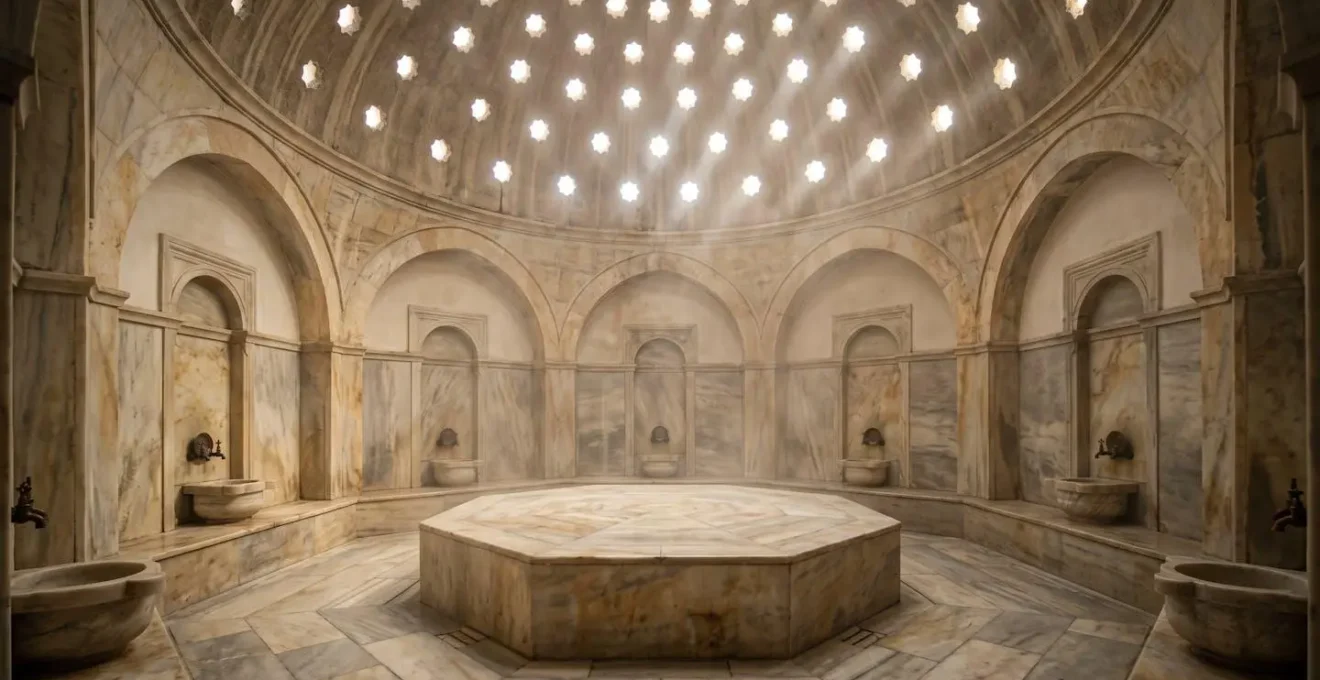
Finding an authentic hamam in Skopje is less about location and more about choosing the right wellness experience for your needs.
- Distinguish between a cultural hamam (for cleansing rituals), a therapeutic banja (for mineral water healing), and a luxury hotel spa.
- Realize that Skopje’s most famous historic hamams in the Old Bazaar are now beautiful but non-operational art galleries.
Recommendation: Define your wellness goal first—cultural immersion, healing, or pampering—to find your perfect Macedonian wellness moment.
The thought of a traditional hamam in Skopje conjures images of ancient stone, billowing steam, and a sense of deep, purifying relaxation. For the weary traveler, it promises a cultural immersion that washes away not just the dust of the road, but the fatigue of the journey itself. Many guides will simply list bathhouses, pushing you towards the most famous names in the Old Bazaar. But this approach often leads to confusion and missed opportunities, as the city’s wellness landscape is more complex and rewarding than it first appears.
The real secret to an authentic experience lies not in simply finding a hamam, but in understanding the different philosophies of wellness available in North Macedonia. Is a vigorous Ottoman-style scrub what your body needs, or would a soak in natural thermal waters be more beneficial? The difference between a hamam, a hotel spa, and a traditional ‘banja’ is significant. This guide moves beyond generic advice to provide a clear framework. We will explore the purpose of the hamam’s core rituals, clarify the etiquette, and help you navigate the options to choose a treatment that truly aligns with your desire for well-being and cultural discovery.
To help you craft the perfect wellness interlude on your Skopje itinerary, this article breaks down everything you need to know. From the science behind the scrub to the crucial distinctions between different spa types, you’ll be equipped to make an informed choice.
Summary: A Traveler’s Guide to Skopje’s Hamam and Wellness Scene
- Why Is the Scrubbing Ritual in a Hamam Good for Traveler’s Fatigue?
- Nudity Rules: What to Wear (or Not) in a Traditional Macedonian Hamam?
- Old Bazaar Hamam vs Hotel Spa: Which Offers a More Genuine Experience?
- The Sauna Mistake That Could Make You Faint After Treatment
- Why Should You Schedule Your Hamam Visit at the End of Your Trip?
- Nudity Rules: What to Wear (or Not) in a Traditional Macedonian Hamam?
- Which Spas in Macedonia Use Natural Thermal Waters?
- How to Choose the Best Wellness Spa Experience in North Macedonia?
Why Is the Scrubbing Ritual in a Hamam Good for Traveler’s Fatigue?
Hours of walking through city streets, carrying luggage, and adjusting to new environments can leave a traveler feeling heavy and sluggish. The central ritual of the hamam, the vigorous exfoliation known as kese, is a powerful antidote to this specific type of fatigue. It’s more than just a deep clean; it’s a physical reset for the body’s systems. The process begins in a warm, steamy room that relaxes the muscles and opens the pores, preparing the skin for treatment. An attendant, known as a tellak (for men) or natır (for women), then uses a coarse mitt to scrub away dead skin cells with practiced, methodical strokes.
This intense exfoliation does two crucial things. First, it mechanically stimulates blood flow to the surface of the skin, bringing fresh oxygen and nutrients to tired tissues and helping to flush out metabolic waste. Second, it powerfully engages the lymphatic system, which is essential for detoxification and immune function. As one expert explains, the principle is similar to other circulation-boosting practices. According to Matthew Perry, a licensed massage therapist, this kind of stimulation has profound effects on the body’s ability to cleanse itself from the inside out.
Dry brushing increases circulation and lymphatic clearing which supports detoxification, boosts immunity, reduces cellulite, and exfoliates for smooth, glowing skin.
– Matthew Perry, Licensed massage therapist at The NOW Massage
By shedding the outer layer of dull skin and kick-starting these internal processes, the kese scrub leaves you feeling not just cleaner, but physically lighter and revitalized. It’s a centuries-old technique perfectly designed to combat the physical toll of travel.
Nudity Rules: What to Wear (or Not) in a Traditional Macedonian Hamam?
For first-time visitors, the most pressing question often revolves around nudity. The key principle in a traditional Macedonian hamam is modesty and comfort. While the experience is communal, it is not a nude-for-all environment. Upon entry, you will be given a peştemal, a traditional, thin cotton towel. This is the primary garment used within the hamam’s wet areas. The atmosphere is one of relaxed, non-judgmental respect, but there are clear customs regarding coverage.
You have several options, and the right choice depends entirely on your personal comfort level. There is no single “correct” way, and you will likely see a mix of approaches among the locals. The goal is to relax, so choose the option that allows you to do so without feeling self-conscious. Here are the common choices:
- Option 1: Your own swimsuit. This provides the most coverage and is a perfectly acceptable choice, especially for first-timers. Be aware that it will get soapy and wet, and the attendant may need to work around it during the scrub.
- Option 2: Bikini bottoms or underwear only. This is a very common choice for women, as it allows the natır to exfoliate the back, shoulders, and stomach more effectively.
- Option 3: The peştemal only. This is the most traditional approach. Men typically wrap it around their waist like a sarong. Women usually wrap it higher, securing it under the arms to cover the chest. It maintains modesty while allowing for an authentic experience.
This close-up view highlights the texture of the traditional peştemal, the cornerstone of hamam attire.
Ultimately, the choice is yours. The staff are accustomed to international visitors and prioritize your comfort. The most important thing is to understand that all traditional hamams have strictly gender-segregated sections or different operating hours for men and women, ensuring a private and respectful environment for all guests.
Old Bazaar Hamam vs Hotel Spa: Which Offers a More Genuine Experience?
When seeking an authentic hamam in Skopje, many travelers naturally head to the Old Bazaar, drawn by the magnificent domes of historic bathhouses. However, this is a common pitfall. The most famous of these structures are no longer operational spas but have been repurposed. This is a crucial distinction that shapes your search for a genuine treatment. For example, as detailed in a report on the city’s cultural heritage, two of the most prominent historic hamams now serve a very different purpose.
Case Study: The Transformation of Skopje’s Historic Hamams
The stunning Daut Pasha Hamam, a 15th-century architectural marvel, has not functioned as a bathhouse for over 70 an. Since 1948, it has been home to Macedonia’s National Gallery. Similarly, the nearby Čifte Hamam, built in 1531, also serves as a contemporary art exhibition space. This means that while these buildings are essential cultural sights, a tourist seeking an actual steam and scrub treatment must look to other, operational facilities in the city.
This leads to the core choice: should you seek out a smaller, dedicated traditional hamam, or opt for the Turkish bath experience offered within a modern hotel spa? The answer depends on your priority: cultural immersion or predictable luxury. A report on Skopje’s repurposed hamams highlights this very dilemma. The following table breaks down the key differences to help you decide.
| Feature | Dedicated Traditional Hamam | Hotel Spa Turkish Bath |
|---|---|---|
| Cultural Authenticity | Original Ottoman ritual preserved, local clientele | Westernized experience adapted for tourists |
| Scrubbing Technique | Vigorous traditional kese exfoliation by experienced tellak/natır | Gentler approach, often combined with modern spa treatments |
| Social Atmosphere | Communal bathing spaces, shared cultural experience | Private rooms, individual treatment focus |
| Tools Used | Traditional kese mitt, olive oil soap, marble göbektaşı | Mix of traditional and modern spa equipment |
| Best For | Cultural immersion, authentic ritual, vigorous cleansing | Privacy, predictable luxury, combining with facials/massages |
The Sauna Mistake That Could Make You Faint After Treatment
Combining a hamam with other heat treatments like a sauna seems like the ultimate day of relaxation, but it carries a significant risk if not sequenced correctly. Both experiences induce vasodilation, the widening of your blood vessels, which causes a drop in blood pressure. Stacking these treatments without adequate recovery time can amplify this effect, leading to dizziness, nausea, or even fainting. This is not the serene state you’re aiming for.
The mistake is assuming all heat is the same. A hamam’s heat is wet and environmental, gradually warming your body as you relax on the marble. The core of the treatment is the vigorous scrub and wash, which is physically demanding. A sauna, especially an infrared one, provides a more intense, direct heat that penetrates the body deeply. Following an intense hamam session with an immediate sauna session puts a cumulative strain on your cardiovascular system, which is already working hard to regulate your body temperature.
To safely enjoy both experiences, timing and hydration are everything. The key is to allow your body to return to a state of equilibrium before introducing another intense heat stimulus. The safest approach is to schedule them on different days entirely. If you must combine them, the sequence is non-negotiable: sauna *before* hamam, with a significant break in between.
Action Plan: Safe Sequencing for Heat Therapies
- Ideal Sequence: Use the sauna BEFORE the hamam if combining on the same day. Allow at least a 2-hour gap between the sessions to let your body cool and blood pressure stabilize.
- Post-Hamam Protocol: After your hamam treatment, rest in the relaxation room for a minimum of 30-45 minutes. Avoid any additional heat exposure during this time.
- Hydration Strategy: As confirmed by health guidelines for sauna use, drink at least 500ml of water immediately after the hamam. Avoid alcohol for at least two hours, as it is also a vasodilator.
- Best Alternative: Schedule your sauna and hamam visits on completely different days. This eliminates any risk of cumulative vasodilation and allows you to fully appreciate each experience.
- Monitor Warning Signs: If you feel dizzy, nauseous, or lightheaded at any point after your hamam, do not proceed with any other heat therapy. Listen to your body and prioritize rest and hydration.
Why Should You Schedule Your Hamam Visit at the End of Your Trip?
While it may be tempting to book a hamam treatment right at the beginning of your Skopje visit to wash away the travel grime, a more strategic approach is to schedule it for the very end of your trip. This timing maximizes the benefits of the ritual and avoids a common, uncomfortable side effect. The reason lies in the nature of the deep exfoliation your skin undergoes during the kese scrub.
The vigorous scrubbing removes the outermost layer of dead skin cells, which also happens to be your skin’s primary defense against the sun. This leaves behind a fresh, new layer of skin that is incredibly smooth and glowing, but also temporarily much more sensitive to UV radiation. Exposing this newly revealed skin to a day of sightseeing under the Macedonian sun, even on a cloudy day, can lead to a quicker, more severe sunburn. A painful sunburn is hardly the holiday memory you’re looking to create.
By scheduling your hamam as one of your final activities, you get to enjoy the deeply relaxing and purifying effects as a perfect conclusion to your journey. You’ll board your plane or train feeling physically and mentally refreshed, with soft, radiant skin that isn’t at immediate risk of sun damage. It also helps to exfoliate any fledgling tan, leaving you with an even skin tone. Think of it less as a “welcome” ritual and more as a “farewell” ceremony, a way to shed the fatigue of your adventures and return home in a state of ultimate renewal.
Furthermore, it’s wise to avoid shaving right before your treatment. The intense scrub on freshly shaved, sensitive skin can cause irritation. Scheduling the hamam at the end of your trip makes this easier to manage.
Nudity Rules: What to Wear (or Not) in a Traditional Macedonian Hamam?
Beyond the practicalities of what to wear, understanding the cultural context of nudity in a hamam is key to feeling truly at ease. The shared bathing space in a traditional hamam is rooted in a long history of community and ritual, not exhibitionism. The atmosphere is one of mutual respect and bodily acceptance, where the focus is on the cleansing process itself. This is a space where people of all ages and body types come for a shared experience of well-being.
The strict gender segregation is the cornerstone of this respectful environment. You will never be in a mixed-gender wet area in an authentic hamam. This ensures a level of privacy and comfort that allows guests to relax fully. The attendants, the tellak and natır, are highly professional and play a crucial role in maintaining this decorum. They are accustomed to working with semi-clothed bodies and perform their duties with a detached, practiced efficiency that is reassuring and never intrusive.
Think of the peştemal not just as a towel, but as a flexible boundary that you control. There is no pressure to expose yourself more than you are comfortable with. The process is designed around you. When the attendant is ready to scrub your back, you might untie or lower the towel, and when they move to your front, you can adjust it accordingly. It’s a silent, understood dance. Embracing this mindset—viewing the experience as a functional, respectful ritual rather than a social event—is the final piece of the puzzle for a comfortable and authentic hamam visit.
Which Spas in Macedonia Use Natural Thermal Waters?
While the hamam is Skopje’s most famous wellness export, North Macedonia has another, equally important tradition centered on its natural thermal waters. This is the world of the ‘banja’, or thermal spa, which offers a fundamentally different experience. Confusing a hamam with a banja is a common mistake for travelers, yet understanding their distinction is the key to unlocking the country’s full wellness potential.
A hamam is a steam-based cleansing ritual. Its primary features are the heated marble, the humidity, and the vigorous kese scrub. While it uses hot water, the specific mineral content of that water is not the main attraction. A banja, on the other hand, is a therapeutic soaking experience. The entire purpose is immersion in natural, mineral-rich thermal waters that are believed to have healing properties for various ailments, from rheumatic conditions to skin issues.
To experience a true banja, you must typically travel outside of Skopje to one of the country’s renowned spa towns. These locations have been built around the source of these healing waters. To make an informed choice, it’s crucial to know the difference in what you are booking, as guidance on traditional bathing etiquette often clarifies. Here’s a clear breakdown:
- Hamam Definition: A cultural ritual focused on cleansing through steam, heat, and exfoliation. The water source is secondary to the process.
- Banja Definition: A health-focused experience centered on soaking in natural, mineral-rich thermal waters for their therapeutic benefits.
- Macedonia’s Thermal Spa Towns: Key locations include Katlanovo (near Skopje, known for its warm mineral springs), Debar (a larger spa resort), and Negorci (offering traditional banja facilities).
- Key Difference: Hamams are about the *process* of getting clean; banjas are about the *properties* of the water you soak in.
- Recommendation: For a complete Macedonian wellness tour, experience both. Enjoy a hamam in Skopje for its cultural and cleansing ritual, and take a day trip to a banja for deep, therapeutic relaxation.
Key takeaways
- Skopje’s most famous historic hamams (Daut Pasha, Čifte) are now art galleries, not operational spas.
- Choose your wellness experience based on your goal: a traditional hamam for cultural immersion, a ‘banja’ for therapeutic soaking, or a hotel spa for private luxury.
- Always schedule your hamam treatment at the end of your trip to avoid sun sensitivity on your freshly exfoliated skin.
How to Choose the Best Wellness Spa Experience in North Macedonia?
You are now equipped with the essential knowledge: the difference between a hamam, a banja, and a hotel spa; the reality of Skopje’s historic buildings; and the importance of timing. The final step is to synthesize this information and make a choice that is perfect for *you*. The “best” wellness experience isn’t a universal title; it’s a personal one, defined entirely by your wellness goals for this specific trip.
Are you a culture-seeker intent on experiencing a centuries-old Ottoman ritual exactly as locals do? Or are you nursing sore muscles after a week of hiking and in need of genuine therapeutic relief? Perhaps you simply want an hour of quiet, luxurious pampering away from the crowds. Each of these desires points to a different type of establishment. Being honest about your primary motivation will prevent you from being disappointed by an experience that, while excellent in its own right, wasn’t what you were truly looking for.
To make this decision straightforward, consider this framework. It maps common travel wellness goals to the most suitable Macedonian spa experience. Use it as your final checklist before you book. This decision matrix is a helpful tool for navigating your options, and its principles are echoed in many guides to traditional baths.
| Your Wellness Goal | Recommended Experience | Key Features | Ideal Location |
|---|---|---|---|
| Cultural Immersion | Traditional Hamam | Ottoman ritual, kese scrub, social bathing, tellak/natır attendants | Skopje (operational hamams, not museum conversions) |
| Healing Specific Ailment | Banja (Thermal Spa) | Natural mineral waters, therapeutic properties, medical supervision available | Katlanovo, Debar, Negorci |
| Pure Luxury & Pampering | 5-Star Hotel Spa | Private treatment rooms, modern facials, aromatherapy, predictable standards | Skopje luxury hotels |
| Physical Recovery | Combination Wellness | Thermal waters + massage therapy + sauna | Regional spa resorts |
| Budget-Conscious | Neighborhood Hamam | Authentic local experience, basic facilities, low cost | Local districts in Skopje |
By defining your intention first, you transform a simple spa visit into a tailored wellness experience, ensuring your time in Skopje leaves you feeling not just clean, but truly restored in body and spirit.