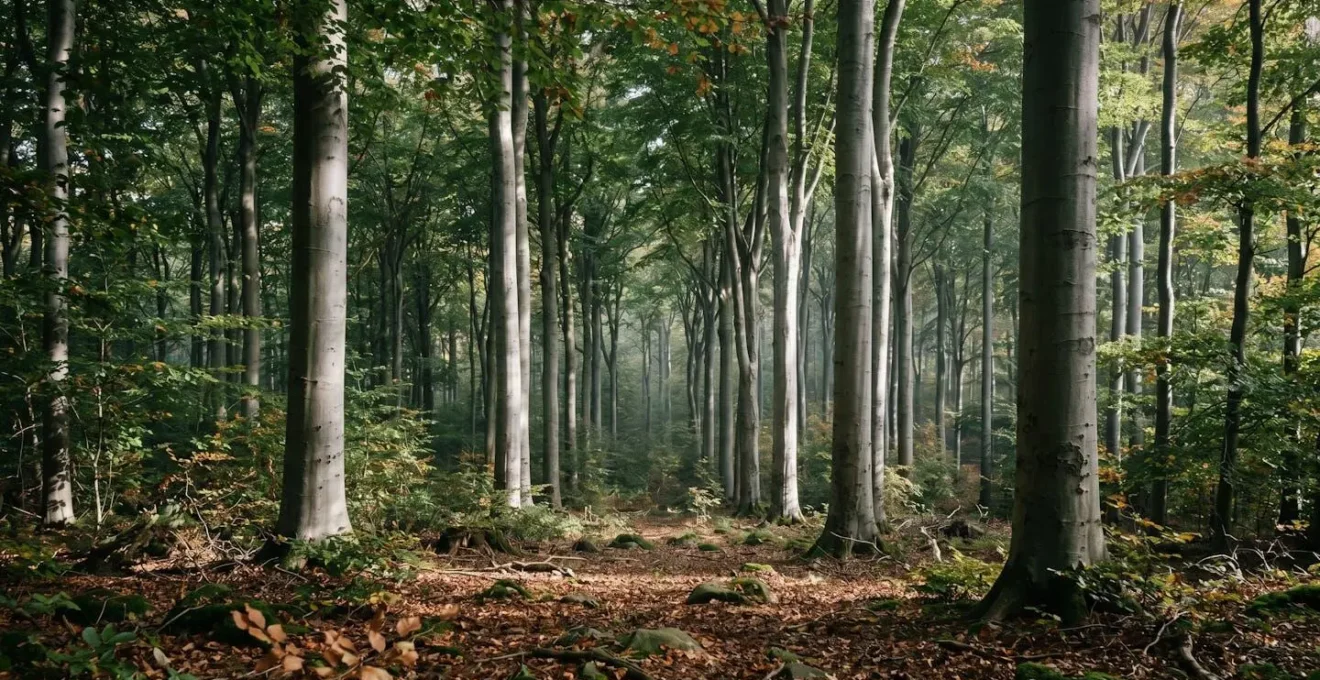
Many visitors see a dense forest and perceive it as an impenetrable wall. The secret of Mavrovo is that this density is not a barrier but a complex, living machine. This guide reveals how the forest’s very structure—from the deep root systems of ancient beech trees to the dappled canopy light—is the true engine of its incredible biodiversity, and teaches you how to read this landscape like a forester to truly understand the wildlife within.
Standing at the edge of Mavrovo’s wilderness, the first thing you notice is the sheer wall of green. The forest doesn’t just begin; it rises. For many ecotourists and photographers, the immediate question is “How can I possibly see anything in there?” The common advice is to be patient, be quiet, and hope to spot a bear or the mythical Balkan Lynx. But this view misses the fundamental truth of the ecosystem. As a forester who has walked these woods for years, I can tell you the density is not the obstacle to wildlife observation; it is the entire reason it’s so magnificent.
The magic isn’t just in what you see, but in understanding the intricate system that allows wildlife to thrive. It’s about moving beyond simply looking for animals and starting to read the forest itself. We’re not just going to talk about which animals live here. We are going to deconstruct the forest’s engine, to understand how its ancient trees, complex layers, and hidden food webs work together. This is the key to unlocking a deeper, more rewarding connection with Mavrovo’s wild heart. Forget what you think you know about “dense” forests; we’re about to explore the logic of this wilderness, section by section.
This guide will walk you through the interconnected layers of Mavrovo’s ecosystem, revealing why its structure is a masterpiece of natural engineering for wildlife. Explore the full story in the sections below.
Summary: Why Mavrovo’s Forest Density Is a Wildlife Haven
- Which Ancient Tree Species Can You Find in Mavrovo’s Old-Growth Forests?
- How to Navigate Dense Forest Trails Without Losing Your Way?
- Pelister Molika Pines vs Mavrovo Beech Forests: Which Is More Unique?
- The Mushroom Picking Mistake That Could Get You Fined in National Parks
- When and Where to Spot Owls and Badgers in Mavrovo After Dark?
- Which Ancient Tree Species Can You Find in Mavrovo’s Old-Growth Forests?
- Why Is the Balkan Lynx Called the “Ghost of the Forest”?
- How to Support the Conservation of the Balkan Lynx While Traveling?
Which Ancient Tree Species Can You Find in Mavrovo’s Old-Growth Forests?
When we talk about Mavrovo’s forest, we must first pay respect to its architects: the trees. This isn’t just a random assortment of wood; it’s a dynamic community dominated by giants. The king among them is the European Beech (Fagus sylvatica). These magnificent trees form vast, cathedral-like canopies that define the very character of the park. They are the engine of the ecosystem. Their deep roots anchor the soil, their dense leaves create the cool, shaded understory, and their seasonal cycles dictate the lives of everything beneath them. Every autumn, they produce mast—a bounty of energy-rich nuts that feed everything from dormice to brown bears preparing for winter.
The sheer scale of this ecosystem is staggering. Mavrovo is a hotspot of biodiversity, and assessments confirm the presence of 1,435 vascular flora species, creating a complex and resilient environment. But it is the beech that provides the foundational structure. It’s not just about the individual trees; it’s about the collective power of the old-growth forest system they create. These are not tree farms; they are ancient, self-regulating systems that have been shaping this landscape for millennia.
Case Study: The Hidden Power of Beech Roots
To understand the forest’s power, you have to look belowground. A long-term study of a beech ecosystem in Mavrovo revealed the sheer scale of this hidden world. Researchers found that the total belowground biomass—the mass of all living roots—was an incredible 57.75 tonnes per hectare. This immense network is a testament to the nutrient cycling capacity of these ancient systems. This isn’t just soil; it’s a living web, a subterranean engine that powers the entire forest, as detailed in an allometric regression analysis for European beech. This is the unseen foundation that makes the vibrant life above ground possible.
Understanding this dominance of the beech is the first step to reading the forest. When you see a beech-dominant forest, you are looking at a powerful, stable ecosystem capable of supporting a high density of wildlife. This is the heart of Mavrovo’s wildness.
How to Navigate Dense Forest Trails Without Losing Your Way?
The very density that makes Mavrovo’s forests a sanctuary for wildlife can be intimidating for visitors. Venturing into this vast wilderness requires respect, preparation, and the right knowledge. While the park has marked trails, its sheer size and the unreliability of mobile signals in deep valleys mean you are responsible for your own safety. Getting lost is a real risk for the unprepared, but a rewarding sense of immersion awaits those who come equipped. It’s an essential skill for anyone wanting to experience the forest on its own terms, moving beyond the main roads and into the heart of the habitat.
Effective navigation is more than just technology; it’s a mindset. It involves observing the natural world around you—the flow of a stream, the slope of the land, the types of trees that indicate a change in elevation. It’s about combining modern tools with timeless wilderness skills. Before you even step on the trail, your navigation plan should be as much a part of your gear as your water bottle and camera.
As you can see, the essential tools of navigation are simple but powerful. A physical map and compass are not just backups; they are your most reliable companions, immune to battery failure or lack of satellite signal. Learning to use them in tandem with the landscape is the most profound way to connect with and understand the forest’s layout.
Your Action Plan: Safe Forest Navigation
- Download offline maps: Before entering areas with no cell signal, download detailed maps for Mavrovo on GPS apps.
- Carry physical backups: Always have a physical map, a reliable compass, and a fully charged power bank as fail-safe tools.
- Use natural landmarks: Learn to read the landscape, noting the direction of water flow in streams and elevation changes indicated by different tree species.
- Plan for time: The park’s vastness is deceptive. Plan your hikes with ample time to return before dark, as night falls quickly in the dense forest.
- Distinguish trail types: Recognize and avoid following animal trails (game trails), which can be misleading and lead you into sensitive wildlife areas. Stick to marked human paths.
By mastering these skills, you transform from a passive visitor into an active and respectful explorer, capable of moving through the wilderness with confidence and safety.
Pelister Molika Pines vs Mavrovo Beech Forests: Which Is More Unique?
A common question from those exploring North Macedonia’s national parks is how Mavrovo’s forests compare to the famous Molika pines of Pelister. Asking which is “more unique” is like asking if a hawk is more unique than an owl. They are both masterpieces of evolution, but engineered for entirely different purposes. As a forester, I see them as two distinct, brilliant expressions of ecological adaptation.
The Pelister Molika Pine (Pinus peuce) is a high-altitude specialist. It’s an endemic species, a relic of the Ice Age found almost exclusively in the Balkans. Its ecosystem is one of survival and resilience. The forest floor is often sparser, the air thinner, the conditions harsher. It creates a specific, almost minimalist habitat. Wildlife here, like the chamois, is adapted to rock and exposure. It is a testament to life’s tenacity at the extremes.
In contrast, the Mavrovo Beech Forest is a powerhouse of productivity and complexity. It is a broadleaf deciduous system that creates a deep, rich layer of humus on the forest floor. This supports an incredible diversity of fungi, insects, and plants, which in turn feeds a wider array of larger animals. The multi-layered canopy and dense undergrowth provide countless niches—places to hide, hunt, nest, and den. While the Molika pine is a rare specialist, the beech forest is a complex, bustling metropolis. It supports a greater biomass and a more intricate food web, making it the engine of biodiversity that it is.
So, which is more unique? The Molika pine is a rare gem, a collector’s item of the botanical world. But the Mavrovo beech forest, in its scale, complexity, and sheer life-supporting power, is arguably the more significant ecological system. It is this structural complexity that provides the perfect stage for the grand drama of wildlife to unfold.
The Mushroom Picking Mistake That Could Get You Fined in National Parks
As you walk the damp, shaded floor of the beech forest, you’ll undoubtedly notice an incredible array of fungi. Foraging for mushrooms can seem like a harmless, rustic activity, but in the context of a national park, it’s an action with significant consequences. The biggest mistake visitors make is assuming that what is permissible in one forest is acceptable in a protected ecosystem like Mavrovo. The rules are strict for a critical reason: you are not the only one who relies on those mushrooms.
While specific regulations in North Macedonia should always be confirmed with park authorities, the principle of restricting foraging in protected areas is a global conservation standard. For example, to protect their ecosystems, some research shows 13 of 59 US National Parks completely ban mushroom foraging. The reason is not to deny humans a tasty meal, but to protect the integrity of the food web. Every mushroom you pick is one less meal for the forest’s permanent residents.
This is not just about a few fungi; it’s about a critical link in the food chain, especially in autumn when animals are building reserves for the winter. As a guardian of this forest, I urge visitors to see mushrooms not as a resource to be harvested, but as a vital component of the ecosystem we are here to protect.
Mushrooms are a critical, high-protein autumn food source for squirrels, deer, and even bears preparing for hibernation. Over-harvesting directly impacts wildlife.
– Mushroom Tracker Conservation Guide
Leaving the fungi on the forest floor is an act of conservation. It ensures that the ecosystem remains whole and that the animals who depend on this resource can thrive. When you observe a mushroom, photograph it, admire it, but leave it for the creatures whose survival may depend on it. This is the true spirit of an ecotourist.
When and Where to Spot Owls and Badgers in Mavrovo After Dark?
As dusk settles over the mountains, a second shift of wildlife begins its day. The forest, which was filled with birdsong, now falls into a watchful silence, punctuated by new, more mysterious sounds. For the patient observer, the night offers a chance to meet some of Mavrovo’s most elusive residents, like owls and badgers. Spotting them, however, is not a matter of luck; it’s a matter of understanding their habits and knowing where to look.
The key to nocturnal observation is the “edge habitat.” This is the transitional zone where two different environments meet—most often, where the dense old-growth forest meets an open meadow or a riverbank. These edges are wildlife highways. They offer animals like badgers the cover of the forest for safety, and the open ground of the meadow for foraging for insects, worms, and roots. For owls, these edges are perfect hunting perches, allowing them to scan the open ground for rodents from the safety of a high branch.
The image above captures this perfect nocturnal stage. Your best strategy is to identify these edge habitats during daylight hours. Then, an hour before dusk, position yourself downwind, find a comfortable and concealed spot, and simply wait. The forest will come to life around you. More often than not, you will hear these animals long before you see them. Learning to recognize the deep hoot of a Ural Owl or the rustling of a badger in the undergrowth is a more effective and less intrusive method of observation.
- Reconnaissance: Identify edge habitats (forest meeting meadow/river) during the day.
- Listening: Your ears are your best tool. The ‘twit-twoo’ of a Tawny Owl or the powerful hoot of a Ural Owl are unmistakable.
- Badger Signs: During the day, look for signs of badger setts: large, D-shaped burrow entrances and nearby latrine pits used for territory marking.
– Timing: Darker, new-moon nights are better for listening and reduce your own visibility, while a full moon can provide natural light but may make some animals more cautious. – Patience and Silence: Position yourself downwind from target areas and remain completely still and silent. Human scent and noise are the biggest deterrents.
Night-time in Mavrovo is not a void; it is a different world. By learning its rules, you can be granted a glimpse into its secret lives.
Which Ancient Tree Species Can You Find in Mavrovo’s Old-Growth Forests?
While the mighty beech tree forms the backbone of Mavrovo, the forest’s richness lies in its full cast of characters. Beyond the dominant canopy, the true complexity of this ecosystem unfolds in its other layers. It is this structural diversity—the combination of different species, heights, and ages—that creates the myriad of niches essential for a thriving wildlife population. To truly read the forest, you must look past the big trees and appreciate the importance of the entire plant community.
Among the other significant tree species, you will find stately Silver Firs (Abies alba), various species of maple (Acer), and ash (Fraxinus), often mixed in with the beech, creating a mosaic of textures and colors, especially in autumn. Each of these species offers different resources: different seeds, different bark for insects, different nesting opportunities. This variety is an insurance policy for wildlife; if the beech mast fails one year, the seeds of other trees might provide a crucial alternative food source.
But the story doesn’t end with the trees. The understory is a world unto itself. Here you will find a host of shrubs and herbaceous plants that are just as vital. Among the more than 1,400 flora species in the park, an incredible 404 are classified as medicinal plants. This number speaks to a long history of human interaction with the forest, but from an ecological perspective, it points to a staggering chemical and biological diversity in the undergrowth. These plants provide browse for roe deer, cover for ground-nesting birds, and a pharmacy of compounds that drive the soil’s health. The forest floor is not empty space; it is the vibrant, living ground floor of the ecosystem.
It is this complete, multi-layered structure that makes the forest so effective. From the tallest firs to the smallest mosses, each plant plays a role. This is the true meaning of density: not just a crowding of trees, but a rich, interwoven tapestry of life at every level.
Why Is the Balkan Lynx Called the “Ghost of the Forest”?
Of all the creatures in Mavrovo, none embodies the spirit of the wilderness more than the Balkan Lynx (Lynx lynx balcanicus). Critically endangered and notoriously elusive, it has earned the nickname “Ghost of the Forest.” This isn’t just a poetic turn of phrase; it’s a perfectly accurate description of its ecological strategy. The lynx doesn’t survive in spite of the dense forest; it survives because of it. The forest itself provides the very cloak of invisibility that makes it a ghost.
The key to understanding the lynx’s phantom nature lies in the interplay between its physical adaptations and the specific environment of the old-growth beech forest. Its survival is a masterclass in camouflage, patience, and using the landscape to its advantage. It moves through the undergrowth with an almost supernatural silence, its large, padded paws acting like snowshoes, distributing its weight so as not to snap a twig. It is an ambush predator, and its success depends entirely on not being seen until the last possible moment.
The forest’s structure is the secret to its success. The dense thickets provide cover for movement, the fallen logs serve as silent highways above the rustling leaf litter, and the dappled light is the final, crucial element of its disguise.
The lynx’s coat is a hyper-specific adaptation to the light patterns of a broadleaf forest, perfectly mimicking the dappled sunlight filtering through the canopy, making it virtually invisible.
– Wildlife Observation Field Guide, Mavrovo National Park Wildlife Species Profile
So, the lynx is a ghost not because it is supernatural, but because it is a product of its environment. Its coat, its hunting style, and its very presence are perfectly attuned to the complex, light-fractured world of the Mavrovo forest. The forest density creates the shadows and patterns that the lynx uses to disappear. To see a lynx is incredibly rare, but to understand *why* it’s so hard to see is to understand the genius of this ecosystem.
Key takeaways
- Forest density is a functional system: It’s not a visual barrier, but a complex engine providing food, shelter, and camouflage for wildlife.
- Ancient trees are the foundation: Old-growth species like the European Beech create the stable, resource-rich environment necessary for a diverse food web.
- Ethical observation is key: True appreciation of wildlife means respecting its habitat, from leaving mushrooms for animals to minimizing disturbance.
How to Support the Conservation of the Balkan Lynx While Traveling?
Understanding the delicate balance that allows the Balkan Lynx to survive is one thing; actively helping to protect it is the next, most crucial step. As a visitor to its home, you have a unique opportunity and a responsibility to be part of the solution. The survival of this critically endangered predator depends on a collective effort, and your actions, however small they may seem, contribute to the larger conservation narrative. Supporting the lynx is not about grand gestures, but about a series of conscious, respectful choices you make throughout your journey in Mavrovo.
The most important thing to accept is that the best way to help the lynx is to minimize your impact. The goal of conservation is to maintain a healthy, wild population, which means allowing the animals to behave naturally, undisturbed by human presence. Your visit can provide vital economic support for conservation, but only if it’s done thoughtfully. Every decision, from where you hike to where you stay, can either help or hinder the efforts to protect this magnificent ghost of the forest.
Here are practical, effective ways every traveler can contribute directly to the Balkan Lynx Recovery Programme and the health of its habitat:
- Report Signs: If you find potential lynx signs (tracks, scat), take photos, note the GPS location, and report them to the park authorities or the Macedonian Ecological Society (MES). This data is invaluable for researchers.
- Stay on Trails: Sticking to designated trails minimizes disturbance to the forest floor, reduces your scent signature in sensitive areas, and respects the territories of wild animals.
- Hire Local and Support Partners: Choose local guides and accommodations that are known partners of the National Park. This ensures your tourism revenue directly supports the local community and conservation initiatives.
- Respect Prey Populations: The lynx depends on healthy populations of roe deer and chamois. Respecting all hunting regulations and protected zones is crucial for maintaining the lynx’s food source.
- Practice Leave No Trace: This includes avoiding off-trail foraging for mushrooms or plants, which disturbs undergrowth and the entire food web that the lynx sits atop.
These actions ensure that tourism remains a positive force for conservation. The hope for the lynx’s future is real, but it requires our collective vigilance.
The Balkan Lynx Recovery Programme has been closely monitoring the lynx for the past 20 years and is optimistic that the envisioned actions will have a positive influence on the population.
– Lisa Leschinski, EuroNatur Project Manager, New Regional Strategy for Balkan Lynx Conservation
Your journey into Mavrovo’s forest is more than a trip; it is an entry into a fragile, interconnected world. By becoming a conscious observer and a respectful guest, you become a guardian of this wilderness and help ensure that the ghost of the forest will continue to roam these ancient woods for generations to come. Your next step is to embrace this role on your visit.