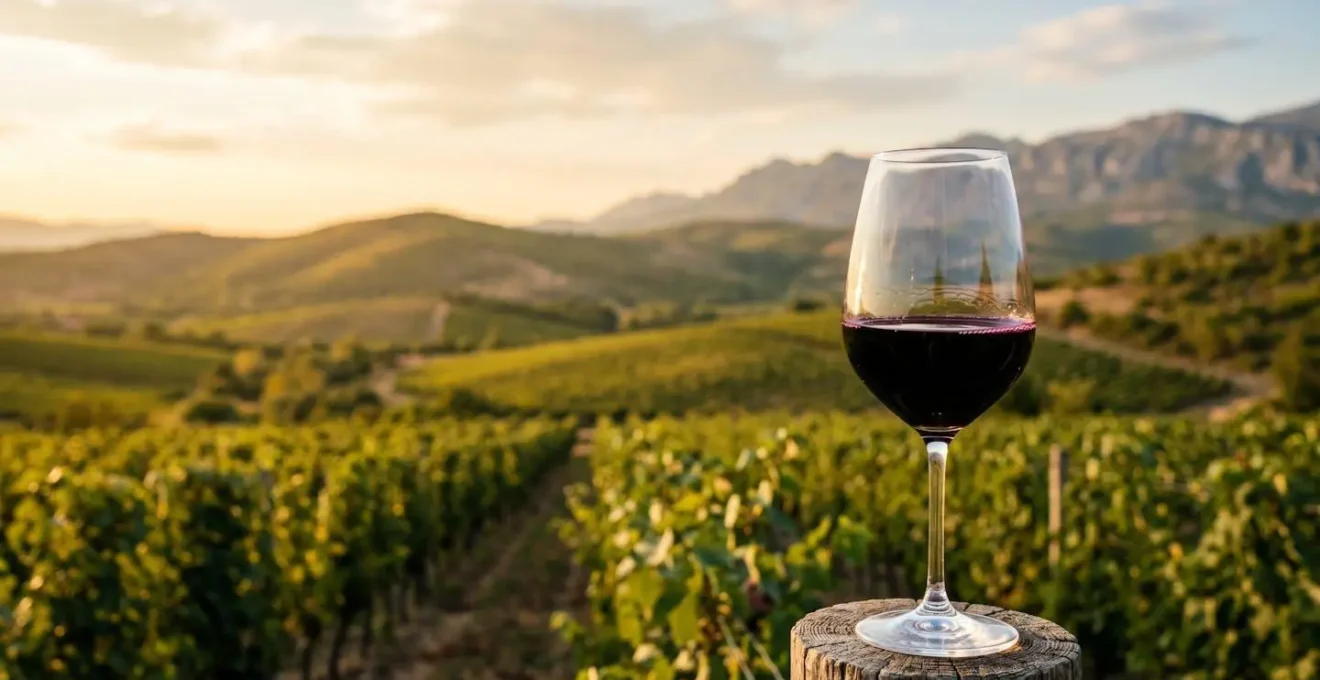
Vranec is not just a drink; it’s Macedonia’s ‘black stallion’—a powerful, complex character that tells the story of our sun and soil in every glass.
- It possesses a dual nature: wild and fruity when young, but develops deep, sophisticated aromas of chocolate and leather with age.
- Its bold structure is a perfect match for rich, traditional Macedonian cuisine and requires specific knowledge to select a premium bottle over a basic one.
Recommendation: To truly know Vranec, go beyond a simple tasting. Learn to read its label, pair it with the right food, and understand the terroir that gives it its soul.
As a winemaker, I see countless travellers come to my country seeking something authentic. They’ve tasted the world’s famous Cabernets, Merlots, and Pinot Noirs. They are looking for a new story, a new flavour, a wine with a soul. When they ask me what to drink in North Macedonia, my answer is always the same, and it comes with a proud smile: you must try Vranec.
Many guides will tell you it’s a “full-bodied red.” This is true, but it’s like calling a champion racehorse “a large animal.” It misses the point entirely. The name Vranec translates to “black stallion,” and that is the key to understanding everything. It’s a wine of immense power, deep colour, and a wild spirit that, when respected and understood, offers a truly rewarding experience. Forget what you think you know about powerful reds; Vranec is not just about strength, it’s about character.
This is not a simple tasting guide. This is an initiation. I will teach you, as I would an apprentice, to understand the heart of our national treasure. We will explore its untamed flavours, find its perfect culinary partners, and learn to distinguish a noble steed from a common workhorse. By the end, you won’t just be a tourist who tried a local wine; you will be a connoisseur who truly understands the soul of Vranec.
This guide is structured to take you on a complete journey into the world of Vranec, from its flavour profile to planning your own visit to our vineyards. Follow along to become a true expert.
Summary: Your Complete Guide to Understanding Macedonia’s Vranec Wine
- What Flavours Should You Expect from a Well-Made Vranec?
- Which Traditional Macedonian Dishes Pair Best with a Bold Vranec?
- Vranec vs Plavac Mali: How Does Macedonia’s Star Compare to Croatia’s?
- The Label Mistake: How to Spot a Premium Vranec Among Cheap Versions?
- How Long Does an Opened Bottle of Vranec Stay Drinkable?
- What Flavours Should You Expect from a Well-Made Vranec?
- Why Does the Tikveš Microclimate Produce Such Full-Bodied Reds?
- How to Plan a Wine Tour in the Tikveš Region Without a Car?
What Flavours Should You Expect from a Well-Made Vranec?
To understand Vranec is to understand its dual nature. It is a grape that tells two different stories depending on its age. When you pour a young Vranec, you’re meeting the “black stallion” in its wild, untamed youth. You’ll notice an almost electric, bright purple colour in the glass. The nose is an explosion of red berries and fruit jams—think blackberry, black cherry, and plum. On the palate, it’s powerful and assertive, with a high level of tannins that coat your mouth. It’s a bold, vigorous wine that can feel almost aggressive if you’re not prepared for its strength.
This youthful power is what makes Vranec so exciting. It’s a wine that demands your attention. As a winemaker, taming these young tannins is one of our greatest challenges and joys. Don’t be shy with it; give it a good swirl in the glass to let it breathe and release its vibrant aromas. This initial encounter is with the raw, potent soul of the grape, a direct expression of the Macedonian sun.
The magic, however, lies in its transformation. As my colleague Ivana Simjanovska notes in the Macedonian Wine Guide, the evolution of Vranec is a remarkable journey:
The young stallions have a bright purple color and a nose full of red berries and fruit jams and lots of tannins. They are not easy to ride. After a few years of aging the color develops into an intense dark ruby/black and the nose develops a more complex aroma that usually has hints of chocolate, black fruits and cinnamon.
– Ivana Simjanovska, Macedonian Wine Guide
This evolution from a wild stallion to a wise, noble steed is the true secret of Vranec. While the young version is thrilling, the aged version is profound. We will explore these deeper, more complex flavours in a moment.
Which Traditional Macedonian Dishes Pair Best with a Bold Vranec?
A wine as bold and generous as Vranec was born to be at the dinner table. In Macedonia, wine is not an afterthought; it is a central part of our meals and our hospitality. To truly experience Vranec, you must enjoy it as we do: with hearty, flavourful food that can stand up to its powerful character. The high tannins and structure of a good Vranec are not just for show; they are designed to cut through richness and fat, cleansing the palate and enhancing the food.
Forget delicate pairings. Vranec calls for rustic, soulful dishes. Grilled meats, rich stews, and aged cheeses are its natural companions. The wine’s dark fruit profile and earthy undertones complement the smoky, savory flavours of our traditional cuisine. To guide you, here is a blueprint for a perfect three-course Macedonian dinner, each course thoughtfully paired to highlight a different facet of our beloved Vranec.
- Appetizer: Start with Ajvar, our smoky roasted red pepper spread, served on crusty bread. The ideal pairing here is a young, fruity Vranec. The wine’s bright acidity is crucial; it cuts through the rich, oily texture of the spread, making each bite fresh and vibrant.
- Main Course: For the main event, serve a classic Tavče Gravče (traditional baked beans with fatty sausage) or a Pastrmajlija (our savory pie with pork). These rich, fatty dishes demand an oak-aged Vranec Reserva. The wine’s high tannins and firm structure are the perfect counterpoint, balancing the richness and creating a harmonious, satisfying pairing.
- Vegetarian Option: For a meatless option, Polneti Piperki (peppers stuffed with rice, herbs, and vegetables) is a superb choice. A medium-bodied Vranec works beautifully here, its earthy notes echoing the smoky, herbaceous flavours of the dish.
- Cheese Course: Conclude your meal with a piece of local aged sheep cheese. This is where a mature, older Vranec shines. Its developed tertiary flavours of leather, tobacco, and dried fruit will enhance the cheese’s complexity, creating a memorable and sophisticated finale.
This progression shows how Vranec’s versatility unfolds when matched with the right food, transforming a simple meal into a true cultural experience.
Vranec vs Plavac Mali: How Does Macedonia’s Star Compare to Croatia’s?
In the Balkans, we have a healthy respect and a friendly rivalry with our neighbours, especially when it comes to wine. Many travellers familiar with the Dalmatian coast have fallen in love with Croatia’s Plavac Mali. It is a magnificent grape, and when they ask me how our Vranec compares, I am always happy to explain. Both are powerful, dark-skinned grapes with a shared genetic heritage linked to Zinfandel, but they are very different beasts, shaped by their unique homes.
Plavac Mali is a child of the sea, grown on the sun-drenched, rocky slopes of the Croatian coast. It carries the saline minerality and herbal notes of the Mediterranean. Our Vranec is a child of the continental land, born in the protected, sun-filled valleys of inland Macedonia. This is why our country is home to over 10,800 hectares of Vranec vines, making it the undisputed king of our terroir. Its character is one of dark forest fruits, rich earth, and spice. One is a sailor, the other a stallion.
To make the distinction clear for any serious wine lover, this side-by-side comparison shows how our national star measures up against Croatia’s champion. As the data shows, both have their own unique strengths and offer very different experiences.
| Characteristic | Vranec (North Macedonia) | Plavac Mali (Croatia) |
|---|---|---|
| Genetic Link | Related to Tribidrag/Zinfandel/Primitivo | Offspring of Crljenak Kaštelanski (Zinfandel) and Dobričić |
| Climate Origin | Continental-Mediterranean (Tikveš inland valley) | Coastal Mediterranean (Dalmatian coast) |
| Aroma Profile | Dark forest fruits (blackberry, black cherry), earthy, leather, tobacco, chocolate | Sun-baked red fruits, saline, Mediterranean garrigue, dried herbs |
| Tannin Structure | High, grippy in youth, velvety with age | High to very high, firm and structured |
| Acidity | Moderate to soft | Medium to medium-plus |
| Alcohol Level | 13.5-17% (often 14-15%) | 13-16% (often 14-15%) |
| Aging Potential | 5-10 years for premium examples | 5-15 years for top examples (Dingač, Postup) |
| Style | Powerful, rustic to elegant (modern wave), big-bodied | Concentrated, structured, mineral-driven |
| Wine Tourism | Adventurous, off-the-beaten-path (Tikveš region) | Established sun-and-sea trail (Pelješac Peninsula) |
Ultimately, one is not better than the other; they are proud cousins with different personalities shaped by their environments. But if you are looking for a wine with a powerful, earthy, and generous soul, the path leads to the heart of Macedonia.
The Label Mistake: How to Spot a Premium Vranec Among Cheap Versions?
This is perhaps the most important lesson I can teach you. The biggest mistake a visitor can make is to judge all Vranec by a single, cheap bottle of ‘Stolno vino’ (Table Wine) from a supermarket. It is like judging an artist’s life work by a single napkin sketch. For decades, much of our production was focused on bulk wine, but a new generation of winemakers is now dedicated to quality. Learning to read the label is your key to unlocking these premium treasures.
In Macedonia, we have a quality classification system printed on the label, and understanding it will transform your buying experience. When you’re in a shop, ignore the flashy design and look for these specific words. They are your guarantee of quality. I have prepared this checklist to serve as your guide. Think of it as a treasure map to finding the best Vranec.
Your Action Plan: Decoding a Macedonian Wine Label
- Look for ‘Vrhunsko vino’: This means “Premium Wine” and is the highest quality tier. It guarantees the wine comes from a specific, controlled origin and meets strict production standards. This is your top priority.
- Search for ‘Kvalitetno vino’: This translates to “Quality Wine.” It’s a solid mid-tier choice, indicating regulated production methods and good quality, though less stringent than ‘Vrhunsko’.
- Avoid ‘Stolno vino’: This is “Table Wine.” It is our basic, everyday wine without origin protection or quality controls. While fine for simple meals, it does not represent the true potential of Vranec.
- Identify premium indicators: Words like ‘Rezerva’ (Reserve), ‘Barik’ (Barrique/oak-aged), or ‘Selekcija’ (Selection) signal a higher quality, often with aging. Also, look for single-vineyard names like ‘Barovo’ or ‘Bela Voda’, which indicate a top-tier, terroir-focused wine.
- Use price as a rough guide: In our local shops, a bottle under 5€ is likely entry-level. The 10-20€ range contains excellent ‘Kvalitetno’ and some ‘Vrhunsko’ wines. Anything over 25€ is firmly in the premium and icon category.
Case Study: The Rise of Tikveš Barovo
The story of Tikveš Barovo perfectly illustrates this shift from bulk to boutique. This Vranec-based wine, sourced from high-altitude vineyards, is a benchmark for new-wave Macedonian winemaking. It showcases how focusing on a specific terroir elevates the grape to world-class status. As noted in a review by renowned wine critics, the wine is aged in oak, exhibiting structured tannins with a velvety texture and a distinct minerality. Its international availability, often in the 15-25€ range, proves that premium Macedonian wine offers incredible value and can compete on the global stage.
By learning these simple rules, you empower yourself to discover the very best our country has to offer, ensuring the Vranec you taste is a true champion.
How Long Does an Opened Bottle of Vranec Stay Drinkable?
You have found a beautiful bottle of premium Vranec, brought it back to your hotel, and enjoyed a glass. But what about the rest? This is a practical question I hear often, especially from travellers. Due to its structure, Vranec is more robust than many other red wines after opening. Its high tannins and, in aged versions, its time in oak, act as natural preservatives, protecting it from the damaging effects of oxygen for longer.
However, it is still a living thing, and its character will change. Generally, a younger, fruitier Vranec is best enjoyed within 2-3 days, while a more structured, oak-aged ‘Rezerva’ can remain enjoyable for 3-5 days. The key is to limit its exposure to air and heat as much as possible. Even without special gadgets, there are simple tricks every traveller can use to preserve the life of their opened bottle:
- Refrigerate Immediately: Even for a big red like Vranec, the cold is your friend. As soon as you’re done pouring, put the cork back in and place the bottle in the refrigerator (or hotel mini-fridge). Cold temperatures significantly slow down the process of oxidation. Simply take it out 20-30 minutes before you want to drink it again.
- The Cork Flip: If the cork is damaged upon opening, don’t force it back in. Flip it upside down and insert the “clean” end. It often creates a tighter seal.
- The Small Bottle Transfer: This is the most effective method. If you have a smaller screw-top bottle (like a water bottle), pour the remaining wine into it. The goal is to fill the new container to the very top, leaving minimal space for air. This drastically reduces oxygen contact.
- Keep it Cool: If a refrigerator isn’t available, find the coolest, darkest place in your room. Avoid leaving the bottle in direct sunlight or a warm car at all costs.
By following these simple steps, you can ensure that your Vranec remains a pleasure to drink over several days, allowing you to savour your discovery without waste.
What Flavours Should You Expect from a Well-Made Vranec?
We have discussed the youthful, primary fruit flavours of Vranec, but the real journey of discovery begins when the wine has been given time to mature. This is where the ‘black stallion’ shows its wisdom and grace. A well-made Vranec, especially a ‘Vrhunsko vino’ that has spent time aging in oak barrels and then in the bottle, undergoes a profound transformation.
The intense purple colour deepens into a dark, inky ruby with garnet hues at the rim. The exuberant nose of fresh berries recedes, making way for a far more complex and sophisticated bouquet. This is where you will discover the tertiary aromas that are the hallmark of a great aged wine. Look for notes of dark chocolate, freshly ground coffee, and a hint of sweet spice like cinnamon or clove, all layered over a core of dried black fruits like figs and prunes. As it opens up in the glass, you may find intriguing scents of rich soil, leather, and sweet tobacco leaf.
On the palate, the aggressive tannins of its youth will have softened and integrated, becoming velvety and smooth, yet still providing a firm structure that promises further aging potential. The wine feels fuller, rounder, and more complete. It is no longer a wine that shouts for attention; it is one that speaks in a deep, confident voice. This evolution is the ultimate expression of the winemaker’s art: guiding the raw power of the grape into a state of elegant maturity. It is a testament to the fact that Vranec is not just a simple, powerful red, but a world-class grape capable of great complexity and longevity.
Why Does the Tikveš Microclimate Produce Such Full-Bodied Reds?
Every great wine is a story of place, and for Vranec, that story is written in the soil and sky of the Tikveš region. You ask why our reds are so consistently full-bodied, powerful, and ripe? The answer is not a single secret, but a perfect storm of four climatic factors that work in synergy. This is what we call our terroir, and it is the engine room of Vranec’s character.
First, we are blessed with relentless sun. With data from regional viticulture studies showing the area benefits from more than 270 sunny days per year, our grapes have all the energy they need to achieve full sugar ripeness. This intense solar radiation is what builds the high alcohol potential (often 13.5-17%) that gives Vranec its signature body and power. Without the sun, there is no stallion.
Second is the crucial day-to-night temperature swing, or diurnal range. Summer days can soar above 40°C (104°F), but thanks to our altitude, the nights become cool. This allows the grape to rest, preserving the vital acidity that prevents the wine from becoming flabby or “cooked.” It’s this balance of ripe sugar and fresh acid that gives the wine both power and structure. Third, our specific soil types, like rendzina and vertisol, force the vines to struggle, sending roots deep into the earth to find water and nutrients, which builds complexity and character. Finally, the region is a natural “heat bowl,” protected by mountains on three sides, which traps warmth, while the Vardar and Crna Reka rivers provide moderating air currents that prevent frost and extreme heat stress. It is this unique convergence of sun, temperature shifts, soil, and geography that forges the full-bodied, intensely flavoured character of a true Tikveš Vranec.
Key takeaways
- Vranec has a dual personality: vibrant and fruity when young, complex and savory with notes of chocolate and leather when aged.
- It is a food-friendly wine that pairs exceptionally well with rich, fatty, and savory Macedonian dishes like grilled meats and Tavče Gravče.
- To ensure quality, look for label terms like ‘Vrhunsko vino’ (Premium) and ‘Rezerva’ (Reserve) to avoid basic table wine.
How to Plan a Wine Tour in the Tikveš Region Without a Car?
So, you have learned the secrets of Vranec, and now you feel the call of the vineyards. Excellent! There is no better way to understand our wine than to walk the soil it comes from and meet the people who make it. And I have good news for the independent traveller: you do not need a car to experience the heart of Macedonian wine country.
With a little planning, a car-free tour of the Tikveš region is not only possible but also relaxing and immersive. The two main towns, Kavadarci and Negotino, are your gateways, both easily accessible by bus from the capital, Skopje. From there, a world of wine awaits. Here is a practical blueprint to help you organize your own tour.
- The Hub & Spoke Method: Base yourself in the town of Kavadarci. It’s the largest town in the region and is reachable via a 90-minute bus ride from Skopje (costing around 5-8€). Book a hotel or guesthouse near the centre, and you’ll have restaurants and services within walking distance.
- Coordinate with a Local Taxi: This is your key to the wineries. Ask your hotel reception to recommend a trusted local taxi driver. You can pre-arrange a half-day or full-day tour, with the driver taking you to 2-3 wineries. Expect to pay around 50-80€ for a 4-5 hour circuit, which is great value when shared.
- Book Appointments in Advance: Do not just show up. Our wineries, especially the smaller family ones, operate by appointment. Contact them by email or phone 2-3 weeks before your visit. A simple message asking for a tasting for your group size, the date, and the cost is all that’s needed.
- Consider an Organized Tour: If you prefer to have everything handled for you, local operators like Wine Tours Macedonia offer excellent small-group experiences. This eliminates any language barriers and logistical stress, often including transport, tastings, and a meal.
Case Study: A Traveler’s Car-Free Success Story
This approach is proven to work. One travel couple recently documented their successful tour organized through a local guide. Their experience, detailed on the Road Unraveled travel blog, included visits to major wineries like Stobi and Popova Kula, complete with production tours, barrel room tastings, and a full three-course meal paired with Vranec. They found the guided experience eliminated the stress of coordination and provided invaluable historical context, making it a worthwhile investment for a seamless and enriching visit.
The journey into the world of Vranec is now yours to take. The next step is not to read more, but to taste, and perhaps, to visit. Find a bottle of premium, oak-aged Vranec, share it with friends over a hearty meal, and let the black stallion of Macedonia tell you its story. We will be waiting for you in Tikveš.
Frequently asked questions about Vranec Wine
What should I expect on Day 1 after opening a Vranec?
The wine will be powerful and potentially closed, especially for oak-aged examples. Young Vranec shows bright purple color with intense tannins and fruit jam aromas. It may feel aggressive or tight.
How does Vranec change on Day 2?
The wine opens up significantly, becoming more aromatic and smoother. This is often the ideal drinking window when the fruit, oak, and tertiary notes achieve best balance. Tannins soften and the wine becomes more approachable.
What happens on Day 3 and beyond?
Primary fruit flavors start to fade while acidity becomes more prominent. For high-quality Reserva Vranec with protective tannin structure, the wine remains enjoyable through Day 4-5, though with diminished fruit intensity. Tertiary notes of leather and tobacco may become more pronounced.