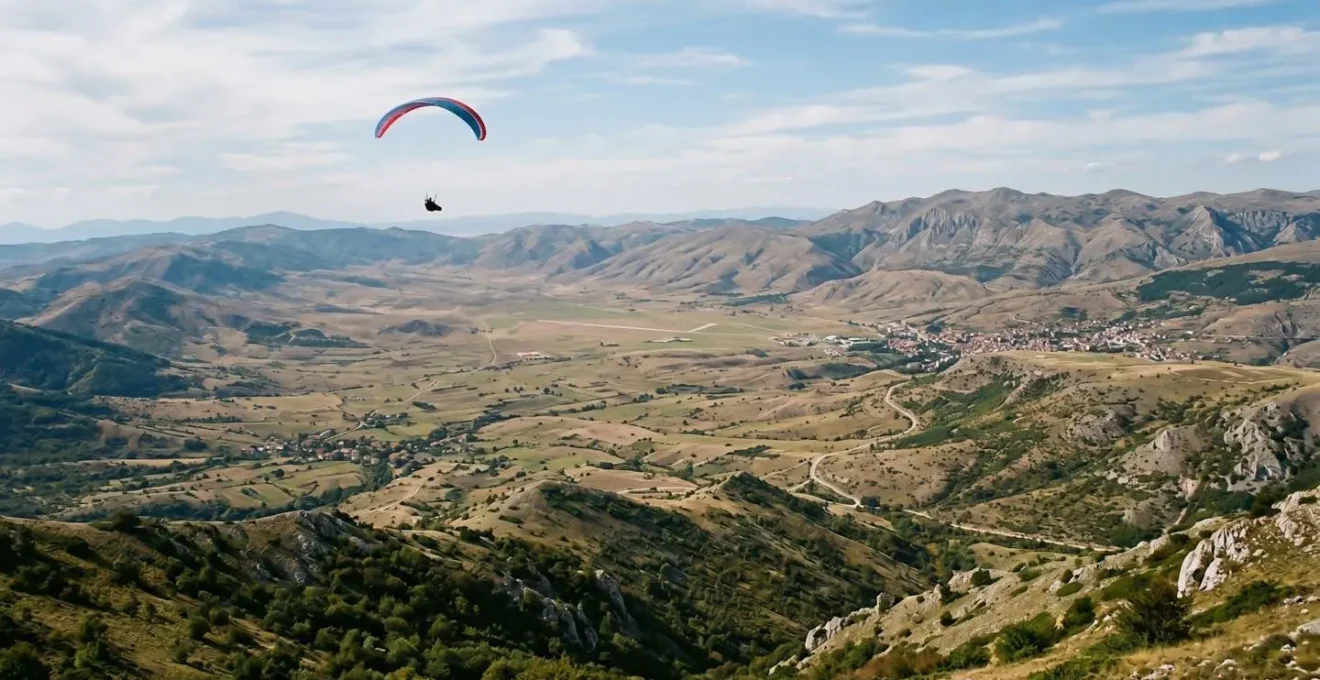
Kruševo isn’t just a top paragliding spot; it’s arguably the most reliable and accessible one in the world for both pros and first-timers.
- Its unique geography provides predictable, safe flying conditions that are unmatched in the Balkans.
- True safety for an adventurer comes from asking the right questions *before* you book, not just trusting a brochure.
Recommendation: Use this pilot’s-eye view to transform your flight from a simple tourist activity into a genuine, unforgettable aerial adventure.
The dream of flight is universal. For an adventurer, it’s not just about being in the air; it’s about finding that perfect place where the conditions, the scenery, and the culture combine into one unforgettable experience. Many places offer paragliding, but few can claim to be truly world-class. You’ve probably heard that you just need to “book a flight and enjoy the view,” but a genuine experience goes much deeper than that. It requires understanding what makes a location special and how to approach it with the confidence of a seasoned professional.
This is where Kruševo, the highest town in the Balkans, enters the picture. It’s a name whispered with respect in the global pilot community. But what turns a beautiful spot into a legendary one? It’s not just the scenery. It’s a combination of predictable weather, accessible takeoff points, and a culture built around the sport. Forget the generic advice. The key to an extraordinary and safe flight in Kruševo is to think like a pilot. It’s about understanding the ‘why’ behind the perfect flight, the ‘how’ of ensuring your safety, and the ‘what’ that makes the entire journey, on the ground and in the air, so memorable. This guide will take you through that process, giving you the knowledge to not just fly, but to fly with insight and absolute confidence.
This article provides a complete roadmap for your adventure. It covers everything from the scientific reasons why Kruševo is a pilot’s paradise to the practical steps for booking a safe tandem flight and making the most of your time in this unique region of North Macedonia.
Summary: A Pilot’s Guide to Paragliding Over the Highest Town in the Balkans
- Why Do Professional Paragliders from Around the World Come to Kruševo?
- How to Book a Tandem Paragliding Flight If You Have Never Flown Before?
- Which Wind Direction and Speed Are Ideal for Paragliding in Kruševo?
- The Fear Mistake: How to Overcome Pre-Flight Anxiety Before Jumping?
- How to Spend a Full Day in Kruševo Between Flying and Sightseeing?
- Why Do Professional Paragliders from Around the World Come to Kruševo?
- The Weather Mistake: How to Spot Sudden Storms on Shar Planina?
- Why Should Bitola Be Your Second City Break in North Macedonia?
Why Do Professional Paragliders from Around the World Come to Kruševo?
When you see dozens of colorful wings dotting the sky above Kruševo, it’s not by accident. This place is a magnet for professional and competitive pilots for one primary reason: aerological predictability. While many mountain locations offer spectacular views, they often come with volatile and unpredictable weather. Kruševo is different. Its unique geography, a high-altitude town nestled in a natural bowl, creates exceptionally reliable and gentle flying conditions, especially during the summer months.
The main takeoff point is easily accessible, and the surrounding flatlands offer vast, safe landing zones. This combination minimizes many of the risks associated with mountain flying. For competitive pilots, this reliability is paramount. It means that competitions are less likely to be canceled due to bad weather. In fact, official documentation for international competitions highlights that in Kruševo, over 90% of days are taskable during the flying season. This is an almost unheard-of statistic in the world of paragliding.
This weather consistency creates an environment where pilots can focus on strategy and performance rather than constantly battling turbulent air. The thermal updrafts are often described as “textbook” – wide, consistent, and easy to work with, allowing for long, high-altitude cross-country flights. For an adventurer looking for a tandem experience, this translates directly into a safer, smoother, and more enjoyable flight. You are flying in conditions that the world’s best pilots actively seek out.
How to Book a Tandem Paragliding Flight If You Have Never Flown Before?
Your first tandem flight should be an experience of pure exhilaration and trust, not anxiety. The key to ensuring this is to shift your mindset from being a passive passenger to an active partner in your safety. This begins with the “safety dialogue”—the questions you ask before you ever hand over your money. A professional, confident pilot will welcome your questions and be happy to provide clear, verifiable answers. Their priority is your confidence and safety, not just making a sale.
Before booking, it’s crucial to verify the pilot’s qualifications and the operator’s safety standards. Don’t be shy; this is the standard procedure in the flying community. A reputable operator will have all this information readily available. The focus should be on the pilot’s experience, the equipment’s condition, and the company’s policy on weather. The most important decision you make is choosing the right pilot, as their judgment is your greatest safety asset. The visual below shows the kind of professional equipment and meticulous preparation you should expect.
As you can see, every piece of equipment is designed for security. Your pilot should walk you through the harness, the carabiner connections, and the pre-flight checks. This briefing is not just a formality; it’s the foundation of the trust between you and your pilot. A good pilot will explain what they are doing and why, turning the unknown into a clear, understandable process. Below is a checklist of critical questions to guide your safety dialogue.
Your Pre-Flight Safety Checklist: Questions to Ask Your Tandem Pilot
- Pilot Certification: Do you hold a professional tandem qualification, like the APPI Pro Tandem Pilot rating or an equivalent national certification?
- Equipment Inspection: Can you show me the glider’s certification and the date of its last professional inspection and repack of the reserve parachute?
- Insurance Coverage: What specific insurance is included with the flight, particularly regarding passenger and third-party liability?
- Weather Policy: What is your protocol for canceling or postponing a flight if the weather conditions are marginal or uncertain?
- Pilot Experience: Can you share your logged flight hours and how many tandem flights you’ve conducted, especially here in Kruševo?
Which Wind Direction and Speed Are Ideal for Paragliding in Kruševo?
From a pilot’s perspective, the wind is not an enemy to be fought but an energy to be harnessed. Understanding the basics of what makes for “good” wind is key to appreciating the art of paragliding. It’s not just about whether it’s windy or not; it’s about direction, speed, and consistency. For a paraglider to launch, fly efficiently, and land safely, it needs a specific type of airflow.
The ideal wind for launching is one that blows directly up the slope of the takeoff hill. This is known as an onshore or headwind. It helps inflate the glider and provides lift, allowing for a short, easy launch run rather than a “jump.” Wind blowing from behind (tailwind) or from the side (crosswind) makes launching significantly more difficult and hazardous. In Kruševo, the main takeoff site is perfectly oriented to catch the prevailing valley winds, which is another reason for its popularity.
Regarding speed, there is a “sweet spot.” Too little wind makes it hard to inflate the wing and get airborne. Too much wind can make the glider difficult to control on the ground and can lead to being lifted unexpectedly. While it varies slightly depending on the glider model, the general ideal range is between 5 to 15 mph (8-24 km/h). Your pilot will be constantly monitoring wind speed and direction with a handheld anemometer and by observing wind-socks and natural indicators. Their decision to fly or wait is based on decades of experience reading these subtle but critical signs.
The Fear Mistake: How to Overcome Pre-Flight Anxiety Before Jumping?
Let’s be honest: standing on the edge of a mountain, attached to a stranger and a giant piece of fabric, is not an everyday situation. Feeling a surge of adrenaline or a knot of anxiety in your stomach is completely normal. The biggest mistake is trying to ignore this feeling or being ashamed of it. Fear is a natural signal, and the best way to manage it is with knowledge and trust. The anxiety you feel often comes from the unknown, especially the fear of the “jump.”
This is where it’s crucial to understand that tandem paragliding does not involve jumping off a cliff. This is a common misconception fueled by movies. The launch is a controlled, gradual process. You and your pilot will simply walk, then jog down a gentle slope until the wing overhead lifts you gracefully into the air. There is no stomach-lurching drop, only a smooth transition from ground to sky. Many first-time fliers are surprised by how peaceful it feels. As one passenger described the experience:
In comparison to other extreme pursuits such as skydiving or bungee jumping, tandem paragliding isn’t very scary. Once you’ve left the ground it won’t take you long to feel safe and comfortable. Many people actually find it very relaxing and enjoy taking in the view. The reality is that only experienced pilots jump off cliffs. In tandem paragliding you’ll be launching on a hill where you and the pilot will perform a short run until you achieve lift.
– First-time passenger, Global Paragliding
The best way to overcome pre-flight jitters is to communicate with your pilot. Tell them how you feel. A good pilot is also a good coach. They will talk you through every step, demystify the process, and remind you to breathe. Your job is simple: listen to their instructions, commit to the launch run, and trust in their expertise. Once your feet leave the ground and you settle into the comfortable harness, the anxiety almost always melts away, replaced by the breathtaking view and the quiet serenity of free flight.
How to Spend a Full Day in Kruševo Between Flying and Sightseeing?
Your adventure in Kruševo shouldn’t be limited to the sky. The town itself is a living museum, steeped in a history that is as dramatic and inspiring as the landscape. Scheduling a full day allows you to immerse yourself in this unique blend of flight and culture. A typical flying day often involves waiting for the perfect conditions to develop, usually in the late morning or early afternoon. This downtime is the perfect opportunity to explore.
Kruševo holds a special place in Balkan history as the site of the 1903 Ilinden Uprising and the establishment of the short-lived Kruševo Republic. This revolutionary spirit is palpable throughout the town’s traditional architecture and numerous monuments. The most unmissable of these is the Ilinden Monument, also known as the Makedonium. This futuristic, otherworldly structure is a memorial to the uprising and a powerful symbol of Macedonian statehood. Exploring its interior is a surreal and thought-provoking experience.
Beyond the Makedonium, you can wander through the town’s cobblestone streets, visit local museums, or see the nearby monasteries. This cultural immersion provides a rich context for your flight; when you are soaring high above, you are not just looking at a landscape, but at a place of deep historical significance. The day often ends with what pilots call “glass-off”—an evening session when the air becomes smooth and buttery, perfect for a serene sunset flight. It’s a magical time when pilots and locals gather, sharing stories as the sun dips below the mountains.
Why Do Professional Paragliders from Around the World Come to Kruševo?
Beyond the exceptional weather, Kruševo’s appeal to the global paragliding community is reinforced by its outstanding infrastructure and a welcoming culture that has embraced the sport. The town’s layout itself is a significant advantage. As noted by travel guides for pilots, Kruševo sits in a natural bowl on the ridge top at 1350m, which makes getting to the main takeoff point a simple walk or a very short drive. This is a stark contrast to many other world-class sites where reaching takeoff can be a long and arduous expedition.
This ease of access fosters a vibrant, communal atmosphere. Pilots can easily do multiple flights a day, return to town for lunch, and socialize with fellow aviators from dozens of different countries. Over the years, this has helped Kruševo become a hub for major international competitions, including multiple World and European Championships. This legacy of high-level competition means the local infrastructure is well-developed, with experienced retrieval services, up-to-the-minute weather information, and a community of tandem pilots who are accustomed to operating at the highest professional standards.
When you fly in Kruševo, you are stepping into this rich ecosystem. You are not just a tourist; you are participating in a culture of flight that has been cultivated over decades. The local pilots and operators have seen it all and have flown with the world’s best. This deep well of experience adds an invisible but powerful layer of safety and professionalism to your tandem flight, ensuring that the standards you experience are truly world-class.
The Weather Mistake: How to Spot Sudden Storms on Shar Planina?
While Kruševo is known for its stable weather, it’s still a mountain environment. A professional pilot’s mindset always includes a healthy respect for the power of nature. One of the most critical skills in mountain flying is the ability to read the sky and anticipate rapid weather changes. The Shar Planina range, another stunning but more remote flying area in North Macedonia, provides a dramatic case study in why this is so important. Conditions there can change in minutes, and learning to spot the warning signs is a universal lesson for any mountain adventurer.
The most significant danger in the mountains during warmer months is the development of thunderstorms. These are not just rain showers; they are powerful weather systems. As one paragliding safety organization puts it clearly:
Thunderstorms bring lightning, heavy rain, and turbulent winds. These conditions are extremely dangerous and should be avoided at all costs.
– Air et Aventure paragliding safety team, Paragliding Weather: Ideal conditions for paragliding
So, how do you spot them? Look for the tell-tale signs of a developing storm cloud (cumulonimbus). Key indicators include: * Rapid vertical growth: Clouds that are growing upwards quickly, looking like a cauliflower or anvil. * Dark, flat bases: A sign of high moisture content and potential for heavy precipitation. * Sudden change in wind: An abrupt shift in wind direction or a sudden gusty, cool breeze can be the outflow from an approaching storm. * Distant thunder: If you can hear thunder, you are already close enough to be at risk of a lightning strike.
Your pilot is an expert at this. They will be watching the sky, not just their instruments, throughout the day. They will make the conservative call to land long before a storm becomes a direct threat. Trusting their judgment is non-negotiable. This vigilance is the hallmark of a true professional.
Key takeaways
- Kruševo’s world-class status comes from a rare combination of predictable weather, excellent infrastructure, and a deep-rooted flying culture.
- Your safety is secured not just by a pilot’s certification, but by your willingness to engage in a “safety dialogue” and ask critical questions before booking.
- Overcoming pre-flight fear is about understanding the launch process is a gentle lift, not a jump, and trusting your pilot’s coaching.
Why Should Bitola Be Your Second City Break in North Macedonia?
The adventure of flying in Kruševo gives you a breathtaking aerial perspective, but the story of this region is also written on the ground. To truly complete your North Macedonian journey, your second city break should undoubtedly be Bitola. As the country’s former diplomatic and cultural capital, it offers a sophisticated, elegant contrast to the rustic mountain charm of Kruševo. Best of all, it’s an easy and scenic day trip.
Located just 55 km away (approximately a 1-hour drive), Bitola feels like a step into a different era. The city’s main artery, Širok Sokak (Wide Alley), is a magnificent pedestrian street lined with colorful neo-classical buildings that house stylish cafes, boutiques, and restaurants. It’s a place to see and be seen, where the “coffee culture” is a serious and delightful pastime. This elegant atmosphere is a legacy of its past as a hub for European consulates during the Ottoman Empire.
The single greatest attraction in Bitola is the ancient city of Heraclea Lyncestis. Founded by Philip II of Macedon, the father of Alexander the Great, this archaeological site boasts some of the most stunningly preserved Roman and early Christian mosaics in the Balkans. Walking through the ruins of its amphitheater, basilicas, and baths, you can feel the layers of history under your feet. It’s a powerful reminder of the deep historical roots of this land you just soared over.
Combining the thrill of Kruševo with the cultural depth of Bitola creates a perfectly balanced itinerary. It allows you to experience both the natural majesty and the rich, cosmopolitan history of North Macedonia, making your adventure a truly comprehensive one.
To truly experience the magic of flight in Kruševo, the next step is to start planning your adventure. Use these insights to choose a professional operator, prepare for your flight, and immerse yourself in the incredible culture of North Macedonia.