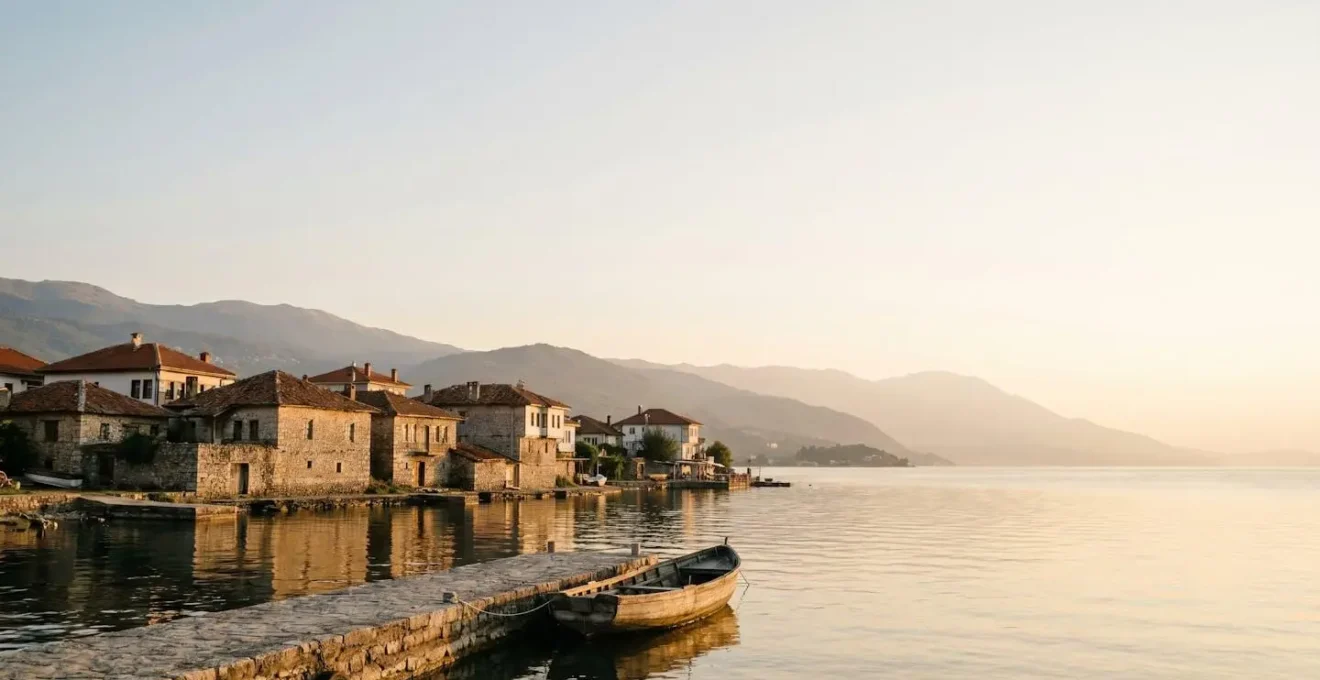
In summary:
- Unlock a daily budget of under £30 in Skopje by mastering local eateries and free activities, making your money go further.
- Master logistical hacks, from ultra-cheap flights and efficient intercity buses to avoiding common airport taxi scams that target tourists.
- Go beyond budget travel by understanding local culture, from navigating coffee invitations to knowing why starting your Balkan tour here is a masterstroke.
As a London-based travel expert, I’m constantly asked for the next great destination—a place that offers the beauty of Croatia or Greece but without the crowds and crippling price tags. For UK couples and solo adventurers, the answer is increasingly clear: North Macedonia. The idea of a rich, week-long European holiday for under £600 might sound like a relic of the past, but in the Balkans, it’s not just possible; it’s a strategic choice for the savvy traveller.
Most guides will tell you North Macedonia is “cheap” and leave it at that. They’ll give you a generic list of sights and move on. This approach misses the point entirely. The true magic lies not in just spending less, but in spending smarter. It’s about understanding the ‘why’ behind the prices, the ‘how’ of the logistics, and the cultural nuances that transform a budget trip into a priceless experience. Forget the usual advice that barely scratches the surface.
The key isn’t just finding a cheap destination; it’s about mastering its systems. What if the real secret to an affordable trip wasn’t just low costs, but your ability to navigate them like a local? That’s the perspective we’re taking here. This is not another list of things to see. This is your financial and logistical masterclass for conquering North Macedonia.
In this guide, we’ll deconstruct the £600 budget, showing you how to get there for less than a train to Manchester, how to live on £30 a day in the capital, master intercity travel without losing a day, and understand the cultural codes that unlock authentic interactions. We will build a strategic itinerary that is both incredibly affordable and deeply enriching.
This article provides a detailed breakdown of how to structure your trip, from mastering daily costs to understanding local etiquette. The following sections offer a complete roadmap for your adventure.
Summary: A Strategic Guide to a £600 Week in North Macedonia
- Why Your Daily Budget in Skopje Can Be Lower Than £30 Including Meals?
- How to Link Skopje and Ohrid by Bus Without Losing a Whole Day?
- Spring vs Autumn: Which Season Offers the Best Hiking Conditions in Mavrovo?
- The Taxi Scams at Skopje Airport That Cost Tourists Extra £20
- How to Ensure Your UK GHIC Card Is Valid for Balkan Travel Emergencies?
- Why Wizz Air Flights to Skopje Are Often Cheaper Than Trains to Manchester?
- How to React When a Local Invites You for Coffee After 5 Minutes?
- Why Start Your Balkan Peninsula Tour in North Macedonia Instead of Croatia?
Why Your Daily Budget in Skopje Can Be Lower Than £30 Including Meals?
The claim of a sub-£30 daily budget in a European capital might seem like a stretch, but in Skopje, it’s a matter of strategy, not sacrifice. While some analyses suggest a budget traveller’s cost is closer to £36, getting under the £30 mark is entirely achievable by adopting local habits. The key is to sidestep the tourist-centric establishments and embrace the city’s authentic, and incredibly affordable, rhythm. This isn’t about surviving on bread and water; it’s about feasting on burek, kebapi, and tavče gravče for a fraction of what a similar meal would cost in Western Europe.
Your main expenses—food, local transport, and activities—can be managed with remarkable efficiency. Breakfast from a local bakery can cost less than your morning coffee in London. A hearty, delicious lunch at a traditional grill house, or *gostilnica*, will barely make a dent in your wallet. Dinner, even with a local beer, can easily be kept under £12. The most iconic city sights, such as the sprawling Old Bazaar, the monumental Macedonia Square, and the historic Stone Bridge, are completely free to explore. You’re not paying for entry tickets; you’re simply immersing yourself in the city’s living history.
The secret is in the small choices: using bank ATMs instead of tourist-trap exchange offices, buying a city bus card for pennies, and prioritising free walking tours. Here’s a tangible breakdown of how a £30 day looks in practice:
- Breakfast: Burek from a local bakery (£1.50-2)
- Lunch: Kebapi with bread and salad at a traditional grill house like Destan (£5-7)
- Mid-afternoon coffee: Cappuccino at a local café (£1.50-2)
- Dinner: Tavče gravče (bean stew) with local beer at a gostilnica (£10-12)
- Free activities: Walking tour of Old Bazaar, Stone Bridge, Macedonia Square statues, and window shopping (£0)
- Public transport: City bus card for 1-2 rides (£1.50 total)
- Cash withdrawal: Use bank ATMs to avoid high exchange office fees.
By following this simple template, your daily spending stays comfortably low, freeing up your budget for other parts of your Macedonian adventure. It proves that strategic affordability is the real game-changer here.
How to Link Skopje and Ohrid by Bus Without Losing a Whole Day?
A common concern for travellers on a tight schedule is that travel between cities will eat up a precious day. When it comes to the essential Skopje to Ohrid route, this fear is completely unfounded. The Macedonian bus network is surprisingly efficient, modern, and designed to connect the country’s two main hubs without fuss. The journey is not a day-long slog but a scenic, comfortable, and short trip that can be easily integrated into your itinerary, effectively turning a travel day into another day of exploration.
Forget visions of old, rickety buses. Operators like Galeb Ohrid and Classic Company run modern, air-conditioned coaches with amenities like WiFi. With 16 daily departures and a journey time as fast as 2 hours and 54 minutes, you have complete flexibility. You can enjoy a final Skopje breakfast and still be checking into your Ohrid accommodation by early afternoon. The key is planning. By booking a morning departure, you effectively buy yourself an extra half-day in Ohrid, arriving with plenty of time for a lakeside stroll and dinner as the sun sets over the water.
The cost is another major advantage, with tickets ranging from €13-€15. This logistical efficiency is a cornerstone of a successful budget trip. You’re not just saving money; you’re saving valuable time, which is often the more limited resource. Choosing the right operator can further enhance the experience, with some offering express routes with fewer stops. A quick comparison shows just how seamless this connection can be.
The variety of operators and departure times makes the Skopje-Ohrid link a perfect example of North Macedonia’s accessible infrastructure. Choosing the right bus service ensures your journey is part of the adventure, not a hurdle to overcome.
| Bus Operator | First Departure | Last Departure | Journey Time | Price Range | Amenities |
|---|---|---|---|---|---|
| Galeb Ohrid | 05:30 AM | 08:32 PM | 2h 54min – 3h 20min | €13-15 | WiFi (most buses), restrooms, air conditioning |
| Classic Company Ohrid | 06:30 AM | 08:00 PM | 3h 7min – 3h 14min | €13.92-15 | Express & multi-stop options, comfortable seating |
| Delfina Tours | Variable | Variable | ~3h 9min | €12-14 | Standard amenities, cash-only at station |
Spring vs Autumn: Which Season Offers the Best Hiking Conditions in Mavrovo?
For nature lovers, a trip to North Macedonia isn’t complete without exploring the rugged beauty of Mavrovo National Park. The question isn’t whether to go, but when. Both spring (April-May) and autumn (September-October) offer stunning landscapes and pleasant temperatures, but they provide distinctly different hiking experiences. Your choice will depend on whether you prefer lush, vibrant life or the tranquil, golden hues of the fall. There is no wrong answer, but there is a ‘best’ answer for your personal hiking style.
Spring in Mavrovo is a powerful, energetic affair. The park explodes into lush green landscapes, snowmelt fuels roaring waterfalls at their absolute peak, and the air is filled with the sounds of returning birds. It’s a prime season for birdwatching. However, this rebirth comes with a trade-off: the weather is less predictable, with a higher chance of rain. Trails, particularly at lower elevations, can be muddy, and some higher-altitude paths may still be inaccessible due to lingering snow. Waterproof gear isn’t just recommended; it’s essential.
This is where the tactile reality of the trail becomes crucial; the feel of your boots on the path is part of the experience.
Autumn, by contrast, offers stability and solitude. The weather is generally more reliable, with a higher number of clear, dry days perfect for hiking. The trails are firm underfoot, and the entire park is painted in spectacular golden foliage. The trade-off is decreasing daylight hours, requiring more careful planning to avoid being caught out after sunset. While wildlife is quieter, the lower number of tourists means you’re more likely to have the trails—and the breathtaking views—all to yourself. The crisp air and serene atmosphere provide a more contemplative hiking experience.
Ultimately, the decision comes down to a head-to-head comparison of factors. One season offers vibrant life and challenges, the other offers serene beauty and reliability.
| Factor | Spring (April-May) | Autumn (September-October) |
|---|---|---|
| Weather Stability | Less stable, higher rain risk | More reliable, stable dry days |
| Trail Conditions | Muddy trails, possible high-altitude snow | Clear, dry paths |
| Landscape | Lush green, roaring waterfalls at fullest | Spectacular golden foliage |
| Wildlife | Prime birdwatching season, park coming alive | Quieter wildlife, migration period |
| Crowds | Moderate tourist traffic | Lower crowds post-peak season, more solitude |
| Daylight Hours | Increasing (13-15 hours) | Decreasing (11-13 hours), earlier sunset planning needed |
| Essential Gear | Waterproof boots mandatory, rain jacket | Layering crucial for cold mornings, lighter waterproofing |
| Trail Accessibility | Some higher trails may still be closed due to snow | All trails generally accessible, some guest houses closing for season |
The Taxi Scams at Skopje Airport That Cost Tourists Extra £20
Your arrival at an airport sets the tone for the entire trip, and nothing sours that initial excitement faster than getting ripped off. Unfortunately, like many airports worldwide, Skopje (SKP) has a small contingent of opportunistic taxi drivers who target tired and unfamiliar tourists. Knowing how to spot and avoid these scams is not just about saving money; it’s about starting your Macedonian adventure with confidence and peace of mind. The difference between a legitimate fare and a scam fare can be stark: a fair ride to the city centre should cost £8-£10, but tourists are often tricked into paying £20-£26 or more.
The scams are predictable and follow a few common patterns. The most frequent is the ‘broken meter’ trick, where a driver insists on a high flat fee, claiming their meter is out of order. Others include the ‘per person’ charge, where the agreed-upon price is suddenly multiplied upon arrival, or aggressive touts who approach you inside the terminal offering unofficial rides at hugely inflated rates. These tactics rely on the traveller’s confusion and reluctance to argue in a foreign country.
Fortunately, avoiding these scams is incredibly simple once you know the rules of the game. Your first line of defence is to completely ignore anyone who approaches you inside the arrivals hall. The second is to know your three legitimate, foolproof options for getting into the city. By being prepared, you turn a potential point of stress into a seamless transition. The legitimate metered fare should be around 600-800 MKD, but scammers will quote 1,500-2,000 MKD, which is a significant overcharge based on 2026 official taxi rates.
Here is a breakdown of the common scams and, more importantly, the guaranteed solutions to avoid them:
- SCAM 1: ‘Broken Meter’ – Driver claims taximeter is broken and quotes flat fee of 1,500-2,000 MKD (£20-26).
- SCAM 2: ‘Per Person Charge’ – Driver claims the negotiated price was ‘per person’, doubling or tripling the fare.
- SCAM 3: ‘Unofficial Airport Drivers’ – Touts inside the terminal offer rides at 2-3x official rates.
- SOLUTION 1: Use Official Airport Taxi Desk – Go to the desk in the arrivals hall and get a printed voucher with a fixed price.
- SOLUTION 2: Use Ride-Hailing Apps – Use Bolt or BeeRide. The fare is shown upfront, eliminating any negotiation or surprises.
- BUDGET ALTERNATIVE: Vardar Ekspres Bus – For the ultimate budget option, this bus goes to the city centre for around £1.50-£2.
By simply having this knowledge, you are in complete control. You can walk out of the airport, bypass the scammers with a confident smile, and head straight for your legitimate ride.
How to Ensure Your UK GHIC Card Is Valid for Balkan Travel Emergencies?
For any UK traveller, the Global Health Insurance Card (GHIC) feels like a safety blanket. It’s a crucial piece of kit for European travel, but relying on it without understanding its limitations can be a dangerous mistake, especially in the Balkans. A common and critical misunderstanding is assuming the GHIC works everywhere in Europe. In North Macedonia, this assumption is incorrect and could have serious financial and health consequences. Your GHIC card is not valid there.
The GHIC is based on reciprocal healthcare agreements between the UK and other nations, primarily those within the EU. As North Macedonia is not in the European Union and does not have a specific agreement with the UK, your GHIC offers absolutely no coverage. This is a vital piece of information that many travellers overlook. Even in countries where it is valid, the GHIC only provides access to state-provided emergency care on the same terms as a local resident—it is not a substitute for comprehensive travel insurance. It never covers services like mountain rescue (a critical point for anyone planning to hike in Mavrovo), private clinics, or medical repatriation back to the UK.
This makes purchasing the right travel insurance non-negotiable. It is the single most important pre-trip purchase you will make. For a 7-day trip including hiking activities, a comprehensive policy might cost between £25-£45. This is a tiny fraction of your overall budget, yet it provides a safety net worth tens of thousands of pounds. It covers the gaps the GHIC leaves, ensuring that in a worst-case scenario, you are protected financially and have access to the best possible care.
Before you travel, it’s essential to perform a reality check on your healthcare coverage.
Your GHIC & Insurance Checklist for North Macedonia
- Verify Coverage: Visit the official NHS website to confirm that North Macedonia has no reciprocal healthcare agreement with the UK. Your GHIC is not valid here.
- Purchase Insurance: Buy a comprehensive travel insurance policy that explicitly covers medical emergencies, repatriation, and any specific activities you plan, such as hiking.
- Understand GHIC Limits: Acknowledge that even where valid, the GHIC does not cover mountain rescue, private treatment, or flights home—all of which are standard in good travel insurance.
- Carry Documentation: Keep both your physical travel insurance documents and your GHIC card with you (as it may be useful in transit through a valid country), but know which one to use in North Macedonia.
- Emergency Protocol: In case of an emergency, immediately inform medical staff about your travel insurance and contact your provider’s 24-hour assistance line as soon as possible.
Why Wizz Air Flights to Skopje Are Often Cheaper Than Trains to Manchester?
For any UK-based traveller, the comparison is both startling and revealing: a flight to a different country, a gateway to the Balkans, can often be secured for less than the price of a peak-time train journey from London to Manchester. This isn’t a fluke; it’s the result of a highly targeted business model employed by budget airlines like Wizz Air. Understanding this dynamic is the first step to unlocking incredible value and making a trip to North Macedonia a reality on a shoestring budget.
The price difference isn’t about the quality of the service or the distance covered. It’s about two fundamentally different economic systems. UK rail travel operates within a complex, interconnected national network with high legacy costs, operational overheads, and government subsidies. Its pricing is designed to manage capacity on a network used for daily commuting and essential business travel. Budget airlines, on the other hand, operate on a point-to-point model, often flying from secondary, lower-cost airports to destinations that also have low airport fees.
The core strategy is to stimulate a market that doesn’t necessarily need to travel. They create their own demand. This insight comes directly from experts who study these models. As one analysis explains:
Wizz Air flies directly from a low-cost base to a low-fee airport. UK trains are a complex, interconnected national network with high legacy costs, operational overhead, and subsidies. The Skopje flight price is created to stimulate a leisure market that is highly sensitive to price, using low fares to create its own demand.
– Travel Economics Analysis, Budget airline pricing model comparison 2024-2026
This is why you, the leisure traveller, are the beneficiary. You are the target market. By being flexible with your dates and booking in advance, you can leverage this pricing model to your absolute advantage. The airline isn’t just selling you a seat; it’s selling you the idea of a trip you might not have otherwise considered, and it’s making the entry cost almost irresistible.
How to React When a Local Invites You for Coffee After 5 Minutes?
It’s a scenario that can be baffling for a British traveller used to a certain level of social reserve: you’ve been chatting with a local shopkeeper or someone you just met for barely five minutes, and they invite you for a coffee. In the UK, this might seem unusually forward, even suspicious. In North Macedonia, it is one of the most genuine and common expressions of hospitality you will encounter. Understanding how to react is key to unlocking authentic cultural experiences.
This practice is known as ‘kafe-muabet’ (coffee-talk), and it’s a cornerstone of Macedonian culture. It is not transactional, it is not a scam, and it is rarely a romantic advance. It is a pure and simple expression of curiosity, warmth, and a desire to connect. Unlike the rushed, functional coffee culture in the UK, where a flat white is often a fuel stop, ‘kafe-muabet’ is about the conversation itself. The coffee is merely the vehicle for spending time together, and it can often last for an hour or more.
So, how should you react? The best response is to accept, if you have the time. A simple “Blagodaram” (Thank you) followed by an enthusiastic “I would love to!” will be met with genuine delight. Locals appreciate any attempt to speak their language, no matter how clumsy. If you truly cannot accept due to time constraints, a polite refusal is perfectly acceptable and will not cause offence. Something like, “That’s very kind, but I have to catch a bus. Perhaps another time!” is all that’s needed.
Navigating this cultural moment requires understanding a few unwritten rules. The person who invites almost always insists on paying; arguing over the bill is considered impolite. Simply accept graciously. The coffee is expected to be a leisurely affair, so don’t try to rush it. Your role is simply to be present, engage in the conversation, and show genuine interest. This is not a tourist trap; it’s a doorway into the real heart of the country.
Key takeaways
- Strategic Start: Beginning in North Macedonia allows your budget to acclimatise, saving money that can be used for longer travel or upgrades in more expensive Balkan countries.
- Logistical Mastery: True budget travel is about saving time as well as money. Mastering efficient transport like buses and avoiding scams are key skills.
- Cultural Fluency: The biggest travel rewards come from understanding local customs. Embracing ‘kafe-muabet’ turns a simple coffee into a memorable experience.
Why Start Your Balkan Peninsula Tour in North Macedonia Instead of Croatia?
For many planning a grand tour of the Balkan Peninsula, the default starting point is often Croatia, with its famous coastline and international airports. However, this is a strategic error for the budget-conscious traveller. Starting your journey in North Macedonia is a far smarter move that allows for what can be called a ‘budget acclimatization’ strategy. It’s a simple concept: ease into the region’s pricing structure gradually, rather than being hit with the ‘price shock’ of the most expensive destination first.
The cost-of-living disparity is enormous. A budget traveller in Skopje or Ohrid can comfortably get by on £30-£40 per day. In contrast, according to a 2026 Balkan travel cost analysis, the same traveller in a coastal Croatian city like Dubrovnik or Split would need to budget €70-€120+ (£60-£100+) per day, and that’s being conservative. By starting in North Macedonia, you allow your travel mindset and your wallet to adjust. The money you save in your first week can then be reallocated to extend your trip by several days or to afford nicer accommodation and experiences later in more expensive countries.
Budget Acclimatization Strategy: The North Macedonia to Croatia Route
Starting in North Macedonia allows travelers to ease into regional pricing gradually. A typical budget traveler in Skopje spends £30-£35 daily, compared to £70-£100+ in coastal Croatian cities like Dubrovnik. Moving from Skopje’s accessible budget towards Croatia creates a gradual cost increase that is far easier to manage financially than experiencing ‘price shock’ by starting in expensive Dubrovnik, where accommodation alone can cost €80-€150 per night. This strategy allows travelers to extend their trip duration by 2-3 days with the same overall budget or upgrade experiences in pricier destinations later in the journey.
Beyond the financial logic, there is a cultural one. North Macedonia offers a gentler, less-trodden entry point into the complex history and rich traditions of the Balkans. It is less crowded, arguably more accessible, and provides a deeply authentic experience from day one. You begin your journey feeling like an explorer rather than just another tourist in a crowd. This psychological advantage sets a positive tone for the rest of your adventure. You learn the rhythms of the Balkans in a more forgiving environment before tackling the faster-paced, more expensive coastal destinations.
By starting in North Macedonia, you are not just choosing a destination; you are making a calculated decision that will pay dividends across your entire Balkan journey. Now that you have the blueprint, the only thing left is to book that flight and begin your adventure.