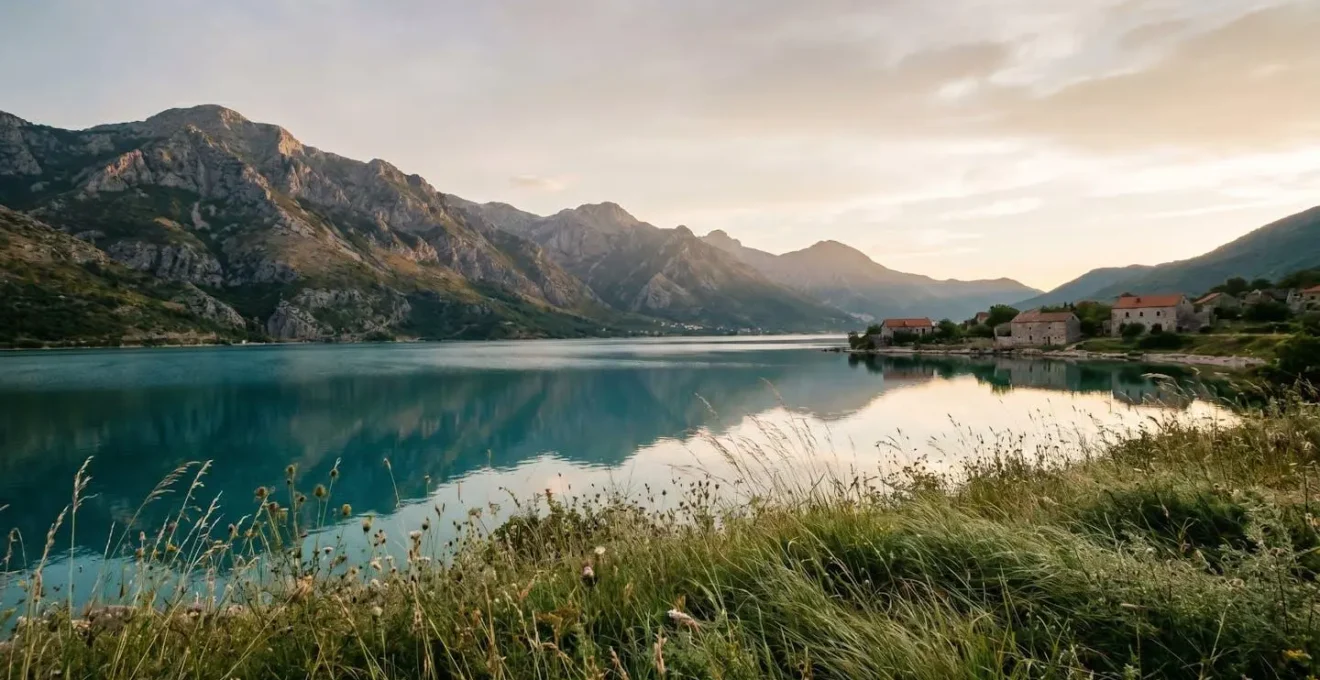
The typical Balkan itinerary is a crowded, expensive coastal sprint; the smart itinerary begins with a strategic “value banking” start in North Macedonia.
- Starting in North Macedonia allows you to front-load savings on luxury stays and daily costs, giving you a bigger budget for the rest of your trip.
- It provides a more authentic, less-crowded entry point into the region’s culture, history, and incredible landscapes.
Recommendation: Use North Macedonia as your strategic launchpad to experience a deeper, more affordable, and efficient Balkan adventure.
Every backpacker’s feed is filled with the same Balkan story: a sun-drenched start in Dubrovnik or Split, followed by a predictable crawl down the Croatian coast. It’s beautiful, no doubt, but it’s also crowded, expensive, and frankly, a bit of a cliché. The travel blogs sell you on the shimmering Adriatic, but they don’t tell you about the shoulder-to-shoulder crowds or the tourist-inflated prices that burn through your budget before you’ve even left your first country. This popular route forces you into a high-cost, high-speed tour from day one.
But what if there’s a smarter way? A route that lets you ease into the Balkans, soak in deeper authenticity, and strategically bank your savings for the entire journey. What if the real secret to conquering the peninsula wasn’t to follow the herd to the coast, but to start in the heart of it all? This guide is built on that counter-intuitive premise: the most strategic, rewarding, and value-packed Balkan tour begins not in Croatia, but in North Macedonia.
We’re going to dismantle the old way of thinking. Forget the coastal sprint. Instead, we’ll explore how to use North Macedonia as a launchpad. We’ll cover the cultural nuances that open doors, the border-crossing hacks that save hours, and the routing intelligence that separates a frustrating drive from an epic road trip. Prepare to see the Balkans from a completely different, and far more rewarding, perspective.
Summary: Your Strategic Guide to Starting a Balkan Tour Differently
- Why Calling It “North Macedonia” Matters for Local Interactions?
- How to Cross the Border to Albania or Greece Without Excessive Delays?
- North Macedonia vs Montenegro: Which Offers Better Value for Luxury Stays?
- The Route Mistake That Adds 4 Hours to Your Drive Through the Mountains
- How to Sequence Your Balkan Trip from Skopje to Tirana efficiently?
- How to Sequence Your Balkan Trip from Skopje to Tirana efficiently?
- Mavrovo vs Pelister: Which Park Offers Better Landscapes for Beginners?
- How to Reach North Macedonia from London for Less Than £50 Return?
Why Calling It “North Macedonia” Matters for Local Interactions?
Let’s start with the first and most fundamental sign of a savvy traveler: respect. Getting the country’s name right isn’t just about political correctness; it’s about acknowledging a long, complex, and very recent history that locals are proud to have navigated. For years, the country was internationally known as FYROM (Former Yugoslav Republic of Macedonia) due to a decades-long naming dispute with Greece. It was a point of constant frustration and felt like the nation’s identity was in a state of limbo.
The resolution came in 2018 with the Prespa Agreement, which officially changed the name to the Republic of North Macedonia. This wasn’t a minor tweak; it was a monumental diplomatic achievement that ended years of tension, unlocked paths to EU and NATO integration, and solidified the nation’s identity on the world stage. When you, as a visitor, make the conscious effort to say “North Macedonia,” you are doing more than just being accurate. You are showing that you see the country for what it is today—a sovereign nation that has resolved its past—and not as a footnote to a former conflict.
In a cafe in Skopje or a guesthouse in Ohrid, using the correct name signals that you’re not just another tourist ticking a box. It shows you’ve done your homework and you have a baseline of respect for their national journey. It’s a small detail that can instantly transform a transactional tourist interaction into a genuine human connection, opening the door to warmer conversations and a more authentic experience. It’s the cheapest, easiest, and most powerful way to show you care.
How to Cross the Border to Albania or Greece Without Excessive Delays?
One of the biggest anxieties for any multi-country road tripper in the Balkans is the border crossing. They can be unpredictable, ranging from a 5-minute wave-through to a multi-hour standstill in the summer heat. A key advantage of starting in North Macedonia is its central location, offering multiple strategic exit points to Albania and Greece. Knowing which crossing to use, and when, is a core piece of Balkan route intelligence.
The busiest crossing by far is Bogorodica/Evzoni into Greece. In July and August, when waves of tourists from Central Europe head for the Greek coast, this border can become a parking lot, especially on weekends. The smart play is to cross here very early on a weekday or avoid it altogether in peak season. For Albania, the main route from Ohrid is Qafë Thanë/Kafasan. It’s scenic, generally efficient, and the most common choice. However, the real pro move is using the lesser-known crossings that can save you significant time and offer a more pleasant experience.
For a trip focused on the Ohrid area, the small Stenje-Pustec crossing on the southern part of the lake is a fantastic alternative for entering Albania, dropping you right into a beautiful, less-traveled part of the country. The table below breaks down the main options, but the golden rule is universal: avoid weekend crossings in summer, always have your documents ready, and check local traffic reports if you can. A little planning here can be the difference between a frustrating delay and a seamless transition to the next chapter of your adventure.
| Border Crossing | Countries | Average Wait Time (Peak Season) | Operating Hours | Notes |
|---|---|---|---|---|
| Bogorodica/Evzoni | North Macedonia → Greece | 30-40 minutes | 24 hours | Busiest crossing; avoid weekends during July-August when Central European tourists travel to Greece |
| Qafë Thanë/Kafasan | Albania → North Macedonia (Ohrid) | 15-30 minutes | 24 hours | Scenic mountain crossing with Lake Ohrid views; less congested alternative |
| Stenje-Pustec | North Macedonia → Albania | 10-20 minutes | 24 hours | Lesser-known lakeside crossing; ideal for avoiding peak traffic |
| Kakavia | Albania → Greece | 20-45 minutes | 24 hours | Major crossing near Gjirokastër; cross early morning or mid-day weekdays |
North Macedonia vs Montenegro: Which Offers Better Value for Luxury Stays?
Here’s where the “strategic start” argument really hits home. Let’s talk about money. Many Balkan itineraries include Montenegro’s stunning Bay of Kotor, but staying there in style comes with a hefty price tag, especially in high season. This is where North Macedonia offers an almost unbelievable advantage in value. For travelers who appreciate a touch of luxury without the Mediterranean price inflation, North Macedonia is in a league of its own. The data is clear: according to cost of living analyses, Montenegro is 44% more expensive than North Macedonia.
This isn’t just about cheaper hostels. The difference is most pronounced in the luxury and high-end comfort sector. Imagine starting your trip at a 5-star lakeside resort in Ohrid with a pool and stunning views for what you’d pay for a mid-range apartment in Kotor. This isn’t an exaggeration. A luxury traveler in North Macedonia can budget around €150 per day for a truly indulgent experience, staying in 4-5 star hotels. In contrast, Montenegro’s coastal luxury hotels can easily triple in price during the summer, driven by the same demand that plagues the Croatian coast.
Case Study: The Strategic Value of Macedonian Luxury
In North Macedonia, the concept of luxury is tied to experience, not just price. For instance, 5-star hotels average around €54 per night and boast exceptional guest ratings. For this price, travelers get more than just a room; they get access to bespoke experiences like private chefs, exclusive wine tastings in the Tikveš region, or spa services at a fraction of what they would cost on the Adriatic coast. Crucially, this pricing remains stable year-round. By starting your Balkan journey in North Macedonia, you “bank” these significant savings early on, effectively funding the more expensive legs of your trip through Montenegro or Croatia later on. It’s a strategic financial move that gives you more freedom and a longer travel runway.
The Route Mistake That Adds 4 Hours to Your Drive Through the Mountains
Your GPS is not your friend in the Balkans. Or rather, it’s a naive friend who believes every line on a map is a real, drivable road. Blindly following Google Maps or Waze is the single biggest mistake travelers make, often leading to stressful, dangerous, and unnecessarily long drives. The app will show you the “shortest” route, but it has no real concept of road quality, hairpin turns, or decade-long construction projects.
A classic example is the infamous Ibarska Magistrala (State Road 22) in Serbia, which a GPS might suggest for reaching Montenegro. Locals, however, know this road for its deteriorated pavement and safety issues. North Macedonia has its own version of this trap. As one report on Balkan driving highlights, a 44-kilometer stretch of road near Ohrid has been under construction for over a decade. On the map, it looks like a shortcut; in reality, it’s a slow crawl over temporary surfaces that can add hours to your trip. The lesson is simple: route intelligence beats GPS algorithms every time.
This means doing a bit of manual vetting before you hit the road. Talk to your guesthouse owner. Check recent travel forums. And most importantly, use a mental checklist to assess the route your GPS suggests. This isn’t about being paranoid; it’s about being prepared. A slightly longer route on a well-maintained E-road is always faster and safer than a “shortcut” on a crumbling local road. Renting a car with a bit more ground clearance in Skopje can also be a cheap insurance policy for the unpredictable road quality you might encounter.
Your Action Plan: Balkan Road Quality Check
- Check road classification codes: E-roads (European routes) are generally well-maintained highways; R-roads (regional) vary significantly; local roads can be unpaved or single-lane.
- Zoom in on Google Maps to maximum level: Look for roads with excessive twisting patterns indicating mountain passes with hairpin turns that add significant travel time.
- Verify Google Street View availability: If Street View imagery is absent or outdated (pre-2020), the road may have limited traffic, poor maintenance, or be problematic for standard vehicles.
- Cross-reference with ViaMichelin.com: This platform provides routing information with highway toll estimates and identifies scenic routes outlined in green when zoomed in.
- Plan for terrain impact on speed: Mountain roads, coastal highways, and border crossings all affect travel time—a three-hour drive on Google Maps may realistically take four to five hours depending on season, road quality, and traffic.
How to Sequence Your Balkan Trip from Skopje to Tirana efficiently?
An efficient trip isn’t just about speed; it’s about flow, experience, and minimizing logistical friction. The Skopje-to-Tirana route is a perfect corridor to illustrate this. Done right, it’s a beautiful journey from urban energy to natural decompression to lakeside bliss, before culminating in Albania’s chaotic capital. Done wrong, it’s a series of exhausting one-night stays and backtrack-heavy driving. The key is using Ohrid not as a simple stopover, but as a strategic “hub-and-spoke” base.
This model, detailed in a fantastic Balkan road trip itinerary, minimizes the stress of constantly packing and unpacking. By basing yourself in Ohrid for a few nights, you give yourself a stable anchor. From there, you can do easy day trips, like hopping across the border to the Albanian side of the lake (Pogradec) or the charming city of Korçë, without the hassle of changing hotels. This approach transforms your travel from a frantic point-to-point race into a relaxed exploration.
The sequence is logical and builds on itself. You start in Skopje to handle the urban intensity and practicalities like renting a car. Then, the drive west through Mavrovo National Park acts as a perfect natural “decompression zone,” breaking up the journey with epic mountain scenery. Finally, you arrive in Ohrid, your calm and beautiful base for several days of deeper exploration. When it’s time to move on to Tirana, you are rested and have multiple border crossing options for the final leg of this journey segment.
Your Itinerary Blueprint: The Ohrid Hub-and-Spoke Model
- Day 1-2: Start in Skopje to experience the urban energy, sculpture-dotted city center, and Ottoman-era Old Bazaar; acclimate to the country and arrange rental car logistics.
- Day 3: Drive west through Mavrovo National Park (perfect midway stop) to decompress with nature, stopping at the famous Jance and Galicnik villages for epic mountain vastness.
- Day 4-6: Base yourself in Ohrid for 2-3 nights and use it as a hub; make a day trip to Albania’s Pogradec or Korçë (only 30-45 minutes across the scenic Qafë Thanë border) without changing hotels.
- Day 7: Cross into Albania via the lakeside Stenje-Pustec border or the Struga route; choose between the ‘scenic but slow’ mountainous detour or the ‘fast but boring’ Struga-Elbasan road based on your priorities.
- Day 8: Arrive in Tirana to experience the vibrant, chaotic energy of Albania’s capital, having sequenced your trip thematically from historical calm to contemporary dynamism.
How to Sequence Your Balkan Trip from Skopje to Tirana efficiently?
Let’s dig deeper into the *why* behind this sequence. It’s not just a list of places; it’s a curated experience designed to manage your energy and expectations. A common backpacker mistake is to front-load all the intense city-hopping, leading to burnout before you’ve even reached the halfway point of your trip. The Skopje-Mavrovo-Ohrid-Tirana sequence is deliberately designed to create a rhythm of urban exploration followed by natural respite.
Starting in Skopje gets the biggest city experience out of the way first. It’s fascinating, quirky, but also demanding. You can handle its unique brand of chaos while your energy levels are high. Then, just as you start to feel urban fatigue, the itinerary provides a release valve: the drive through Mavrovo National Park. This isn’t just a commute; it’s a crucial part of the journey. The vast, quiet landscapes serve as a mental reset, a palate cleanser between the concrete of Skopje and the tranquility of Ohrid.
Arriving in Ohrid after this decompression makes you appreciate its lakeside calm even more. It becomes your sanctuary, not just another dot on the map. The “hub-and-spoke” model works here because Ohrid has enough charm and infrastructure to be a comfortable base, but it’s also perfectly positioned for low-stress cross-border exploration. When you finally leave for Tirana, you are mentally prepared for another dose of vibrant, post-communist city life. You’ve intentionally sequenced your trip thematically: from historical-quirky (Skopje), to natural-vast (Mavrovo), to serene-historical (Ohrid), and finally to modern-chaotic (Tirana). This thematic progression is what makes the journey feel coherent and deeply satisfying, rather than a random collection of overnight stays.
Mavrovo vs Pelister: Which Park Offers Better Landscapes for Beginners?
Once you decide to incorporate North Macedonia’s stunning nature into your trip, a common question arises: Mavrovo or Pelister? Both are national parks, but they offer very different experiences, especially for beginner hikers or travelers who want accessible nature without committing to a multi-day trek. Choosing the right one depends on your itinerary’s logic and the type of landscape that inspires you.
Mavrovo National Park is your best bet if you’re traveling between Skopje and Ohrid. It’s located right on this main artery, making it a perfect and logical midway stop. Its character is defined by “epic vastness”—think huge, rolling forested valleys, a massive reservoir with a famous submerged church, and driving-accessible viewpoints from villages like Galicnik that offer breathtaking panoramas without requiring a strenuous hike. It’s nature on a grand, sweeping scale, perfect for those who want to feel immersed in a vast wilderness.
Pelister National Park, on the other hand, is more about “unique features.” Located south, near Bitola and the Greek border, it’s a more contained park. Its trails are generally better marked and start from concentrated areas, making it very approachable for families or novice hikers. The landscape is distinct, famous for the endemic five-needle Pelister Pine, the “stone rivers” (fascinating glacial formations), and the beautiful glacial lakes known as Pelister’s Eyes. It’s a park you visit for its specific, unique geological and botanical wonders. The following table provides a clear comparison to help you decide.
| Criteria | Mavrovo National Park | Pelister National Park |
|---|---|---|
| Accessibility | Vast open roads reaching Jance and Galicnik villages; wide valley access by car | Contained park with trailheads starting from main hotel areas near Bitola |
| Trail Infrastructure | Moderate trail marking; some remote sections require navigation skills | Better marked trails starting from concentrated entry points |
| Landscape Style | ‘Epic vastness’—huge forested valleys, large reservoir, expansive mountain views | ‘Unique features’—endemic Pelister pine, stone rivers (glacial formations), Pelister’s Eyes glacial lakes |
| Difficulty Level | Easy to moderate; wide valleys allow for gentle exploration without steep ascents for beginners | Easy to moderate; contained trails with clear routes suitable for families and children |
| Best For Beginners | Those who prefer spacious, open environments and driving-accessible viewpoints | Hikers seeking well-defined trails, distinctive geological features, and compact park layout |
| Itinerary Logic | Perfect midway stop when traveling from Skopje to Ohrid | More convenient when entering from Greece or focusing on southern Macedonia |
Key Takeaways
- Starting in North Macedonia is a strategic financial move, allowing you to “bank” savings on high-quality accommodation and experiences.
- The country serves as an authentic, less-crowded “launchpad” into the Balkans, providing a better cultural introduction than the tourist-heavy coast.
- Effective travel sequencing (e.g., Skopje-Mavrovo-Ohrid) and route intelligence are more critical than blindly following GPS for an efficient and enjoyable trip.
How to Reach North Macedonia from London for Less Than £50 Return?
The entire premise of starting in North Macedonia hinges on one final, crucial piece of the puzzle: getting there cheaply. This is where the strategy really shines, because accessing Skopje is often significantly cheaper than flying into the popular Croatian coastal airports like Dubrovnik or Split, especially if you have a bit of flexibility. The key player here is the budget airline Wizz Air, which has turned Skopje into a major, highly accessible hub.
Wizz Air operates direct flights from London Luton to Skopje, and with a flight time of approximately 3 hours, it’s an incredibly efficient connection. Now, let’s be real about the “less than £50 return” price point. You are not going to find this fare by searching for a last-minute flight in the middle of July. This is where backpacker savvy comes in. Achieving this price requires one of two things: planning ahead or traveling in the shoulder seasons (spring and autumn).
By monitoring flights a few months in advance or being willing to travel in, say, April, May, September, or October, these sub-£50 fares are not just possible; they are common. These shoulder seasons are, in many ways, the best time to visit the Balkans anyway—the weather is pleasant, the crowds are gone, and the landscapes are beautiful. By snagging one of these ultra-low-cost fares, you start your trip with a massive financial win. Your biggest expense is minimized from the outset, reinforcing the core strategy: starting in North Macedonia leaves you with more time, more authenticity, and most importantly, more money in your pocket for the adventure ahead.
For a truly strategic Balkan adventure that prioritizes authenticity and value over chasing the crowds, starting in North Macedonia is the logical first step. Now, begin planning your smarter journey by looking for those advance-purchase flights.