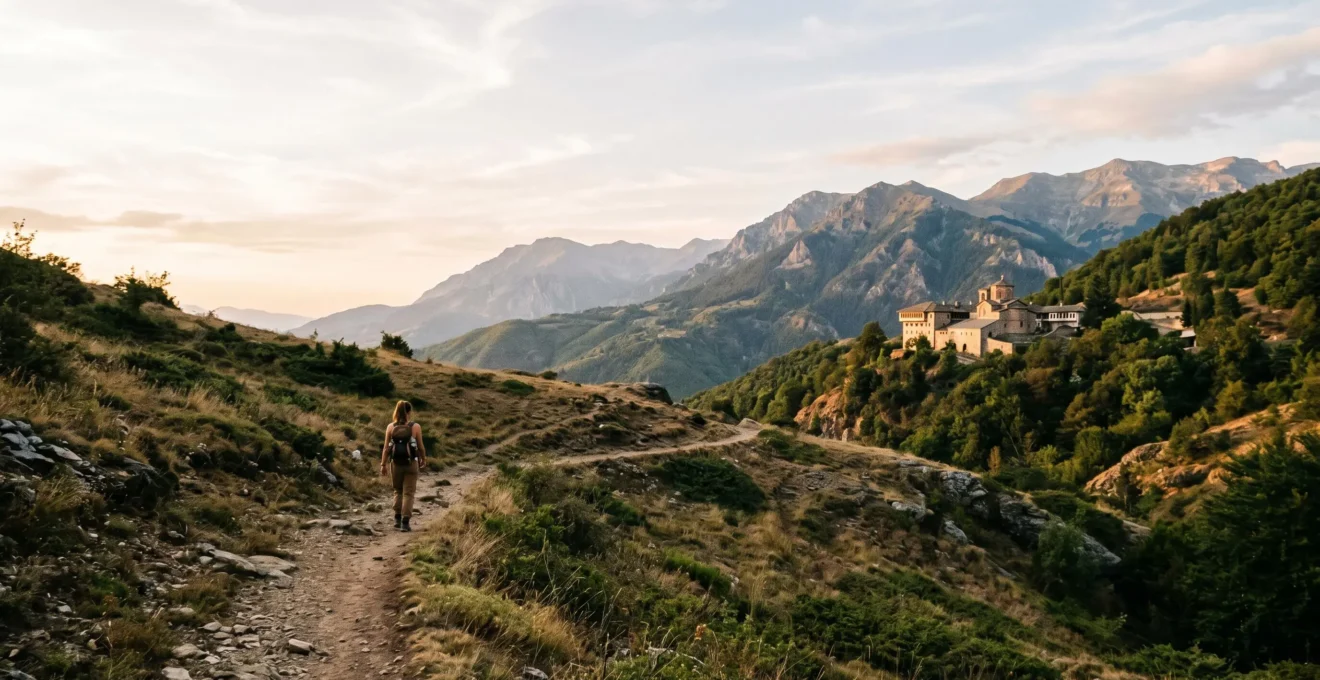
A successful active-heritage holiday in North Macedonia hinges not on a packed schedule, but on mastering the art of rhythmic travel.
- Prioritise strategic hubs over constant, exhausting travel between locations.
- Intentionally plan for seamless transitions between intense hiking and respectful cultural visits.
- Build buffer days into your plan to embrace spontaneity and prevent burnout.
Recommendation: Shift your mindset from chasing a checklist of sights to curating a balanced flow of deeply rewarding experiences.
The promise of North Macedonia is a tantalising one for the dynamic traveller: soaring mountain peaks and ancient Byzantine monasteries, rugged trails and serene UNESCO World Heritage sites. Yet, so often, the attempt to combine these two passions—physical adventure and cultural immersion—results in a frantic race against the clock. The typical itinerary becomes a disjointed checklist, leaving you feeling like you’ve seen much but experienced little, constantly changing hats from dusty hiker to respectful pilgrim, with the friction of transition stealing the joy from both.
Most travel guides offer a predictable solution: a day-by-day schedule alternating a hike with a monastery visit. While logical on paper, this approach often ignores the fundamental challenge of energy management, logistical friction, and the mental shift required to truly appreciate each experience. You end up either too tired after a morning hike to engage with the subtleties of 14th-century frescoes or rushing through a sacred site with one eye on the clock, anxious to get back on the trail before dusk.
But what if the key wasn’t better scheduling, but a better philosophy? This guide proposes a different approach: mastering the art of rhythmic travel. It’s a framework for designing your journey around intentional flow, seamless transitions, and strategic pacing. We will explore how to choose the right logistical anchors, what it truly means to balance a day of activity, and how to transform the journey itself into a rewarding part of your heritage quest. By focusing on the *how* instead of just the *what*, you can craft an adventure that is not just active and cultural, but deeply coherent and restorative.
This article provides a complete framework for building your trip. You’ll discover which regions best serve this travel style, how to avoid common planning mistakes, and the principles for creating a flexible, budget-friendly plan that puts experience over exhaustion.
Summary: How to Design an Active Holiday That Mixes Hiking and Heritage in Macedonia?
- Which Tour Operators Offer Combined Trekking and Monastery Tours?
- How to Balance a Morning Hike with an Afternoon Cultural Visit?
- Ohrid Region vs Mavrovo: Which Area Best Combines Nature and Culture?
- The Overplanning Mistake That Ruins Active Holidays by Day Three
- Spring vs Autumn: Which Season Offers the Best Mix of Activities?
- How to Balance a Morning Hike with an Afternoon Cultural Visit?
- How to Plan a Route Visiting the Most Secluded Mountain Churches?
- How to Plan a 7-Day North Macedonia Itinerary for Under £600?
Which Tour Operators Offer Combined Trekking and Monastery Tours?
While forging your own path is part of the appeal, looking at how expert operators structure their trips offers invaluable insight. These companies have already solved the core logistical puzzles of combining strenuous activity with cultural exploration. They don’t just sell tours; they sell a proven rhythm. They understand that a successful trip is built on a framework that makes the combination of hiking and heritage feel seamless, not forced. These operators are masters of the “heritage quest”—framing a challenging hike not as a separate activity, but as the meaningful pilgrimage required to reach a remote, rewarding cultural site.
Specialists in the region have moved beyond simple “point A to point B” itineraries. They build their tours around a central theme, often using a multi-sport approach to create a dynamic experience. By observing their methods, you can reverse-engineer a successful independent trip. Notice how they select their bases, how they pace their days, and how they integrate local experiences like traditional meals as a bridge between the physical and cultural components of the day. Their success lies in treating the entire day as a single, holistic experience.
Case Study: BikeHike’s Macedonia Multi-Sport Tour
A prime example of this integrated approach is the tour offered by BikeHike Adventures. Their itinerary showcases a hybrid model combining physical adventure with cultural immersion. A key feature includes a full-day hike in Mavrovo National Park, ascending from 1,400m to 2,160m at Mount Medenica. This isn’t just a hike for the sake of it; it’s a journey that culminates in a traditional lunch in the historic village of Galicnik. The cultural element isn’t an afterthought but the reward. Reviewers frequently highlight the unique experience of hiking specifically to access remote monasteries, which adds a layer of adventure and accomplishment to the heritage visit, perfectly embodying the “heritage quest” principle.
Even if you plan to travel independently, studying the flow of these professional tours provides a blueprint. They reveal the best logistical hubs, the most rewarding trail-to-monastery combinations, and the pacing required to make it all work without exhaustion. This is your first step in designing a trip that flows.
How to Balance a Morning Hike with an Afternoon Cultural Visit?
The greatest point of friction in a hybrid holiday is the transition. One moment you are a sweaty, dusty hiker focused on terrain and elevation; the next, you are expected to be a quiet, respectful visitor in a centuries-old sacred space. Mastering this switch is less about time management and more about a practical, pre-planned ritual. The secret to a graceful transition lies in anticipating the needs of both your body and the cultural sites you plan to visit. It’s about having the right gear, the right plan, and the right mindset.
This “transition ritual” starts before you even leave for your hike. It means packing with intention, not just for the trail, but for what comes after. A dedicated, small “culture kit” within your main pack is essential. This prevents you from having to rummage through all your gear in a car park or cafe. Furthermore, it’s about strategically planning your logistics—identifying a comfortable midpoint between the trailhead and the monastery where you can rest, refuel, and physically and mentally reset for the second half of your day.
As the image beautifully captures, this moment of transition is a pause, a quiet ritual of its own. It’s the space between the physical exertion of the hike and the contemplative calm of the cultural visit. To make this moment as smooth as possible, your preparation should be meticulous. This includes verifying the opening hours of monasteries, as many in Macedonia have a midday closure, which can either ruin your plans or, if planned for, provide the perfect window for your lunch and transition.
Your Action Plan: The Hike-to-Heritage Transition Kit
- Pack for a Persona Change: Use a compression bag to pack a complete change of clothes. A fresh shirt, lightweight trousers or a skirt, and clean socks are non-negotiable for monastery visits.
- Organise a Freshen-Up Kit: Include unscented wet wipes, compact deodorant, hand sanitizer, and a small, quick-dry towel for a civilised reset.
- Carry Modesty Items: A lightweight scarf or shawl is essential for women, as many monasteries require head and shoulder coverings. Men should plan to change into long trousers if they hiked in shorts.
- Use a Collapsible Day Bag: Transfer your monastery essentials (camera, water, guidebook) from your large hiking backpack into a smaller, more discreet bag for cultural site visits.
- Plan a Strategic Lunch Stop: Identify a restaurant or cafe between the trail’s end and the heritage site. This provides a comfortable base to change clothes, have a proper meal, and rest.
By treating the transition as a planned and respected part of your day, you eliminate stress and arrive at each destination—be it a mountain peak or a medieval church—ready to fully embrace the experience.
Ohrid Region vs Mavrovo: Which Area Best Combines Nature and Culture?
Choosing your “logistical anchor” is the single most important decision you’ll make when designing your trip. This base camp will define the character of your adventure. In North Macedonia, the two premier choices for an active-heritage holiday are the Ohrid region and Mavrovo National Park. They are not interchangeable. Each offers a profoundly different blend of nature and culture, and your preference will depend on whether you prioritize cultural density and convenience or rugged wilderness and solitude.
Ohrid is the cultural heavyweight. A UNESCO World Heritage site, the town and its eponymous lake are surrounded by an almost unbelievable density of history. You can spend a morning hiking the rewarding trails of Galičica National Park, which separates Lake Ohrid from Lake Prespa, and an afternoon exploring ancient basilicas or Samuel’s Fortress. The logistics are simpler here, with a wide range of accommodations and easy access to trailheads and cultural sites, often without needing a car. Ohrid is for the traveller who wants a deep, layered cultural experience with their nature fix readily accessible.
Mavrovo, on the other hand, is a temple of wilderness. As North Macedonia’s largest national park, it offers a sense of scale and remoteness that Ohrid cannot match. The hiking here is more challenging, with options ranging from moderate lakeside trails to the formidable ascent of Mount Korab (2,764m), the highest peak in the country. The cultural sites, like the iconic St. Jovan Bigorski Monastery and the traditional village of Galičnik, are fewer but feel more integrated into the wild landscape. Mavrovo is for the serious hiker who seeks solitude and authentic mountain culture, where the heritage feels earned and discovered.
The following detailed analysis breaks down the key differences to help you choose the base that aligns perfectly with your travel style. This logistical and cultural comparison is a critical tool for your planning process.
| Criteria | Ohrid Region | Mavrovo National Park |
|---|---|---|
| Ease of Access Without Car | Excellent – Regular buses from Skopje (3 hours), walkable town center, public minibuses to nearby sites | Moderate – Buses from Skopje (2 hours to Mavrovo village), but trailheads require taxis or hiking from village |
| Trail Variety (Beginner to Expert) | Good – Galicica National Park offers trails from 3.8 mi easy loops to 16 km moderate ridge hikes (Magaro Peak 2,255m) | Excellent – Ranges from 12 km lakeside trails (moderate) to Mount Korab ascent 2,764m (challenging, 20 km round trip) |
| Density of Cultural Sites | Very High – UNESCO Old Town, 365 churches, St. Naum Monastery, ancient basilicas, Samuel’s Fortress all within 30 km | Low – Sveti Jovan Bigorski Monastery, Galicnik traditional village, submerged St. Nicholas Church are primary sites |
| Accommodation Options | Extensive – Budget hostels (€15-25), lakefront guesthouses, boutique hotels with Old Town atmosphere | Limited but authentic – Mountain lodges, traditional village homestays in Galicnik/Janche, ski resort hotels |
| Heritage Type | Monumental Ecclesiastical – Byzantine basilicas, medieval fortress walls, UNESCO-protected religious architecture | Ethnographic & Subtle – Vlach shepherd heritage, traditional mountain village architecture, submerged church story |
| Best For | Travelers prioritizing cultural depth, easy logistics, lake activities combined with moderate hiking | Hikers seeking rugged wilderness, authentic mountain culture, solitude, and challenging multi-day treks |
Ultimately, the choice isn’t about which is “better,” but which is better for *you*. Do you want to be immersed in layers of history with nature as your daily escape, or do you want to be lost in nature, with history as your treasured discovery?
The Overplanning Mistake That Ruins Active Holidays by Day Three
The most common trap for ambitious travellers is the tyranny of the itinerary. We create a day-by-day, hour-by-hour schedule, packing it with every must-see site and must-do hike. While it feels productive in the planning stage, this approach is the fastest way to travel burnout. By day three, you’re exhausted from constant transit, behind schedule, and the joy of discovery has been replaced by the stress of adherence. This is the overplanning mistake, and it stems from a “point-to-point” travel mindset rather than a “hub-and-spoke” philosophy.
Rhythmic travel demands a different structure. Instead of changing location every night, you establish 2-3 strategic hubs for 3-4 nights each. This drastically cuts down on packing, unpacking, and transit time, converting that wasted energy into more time for exploration. From each hub—be it Ohrid for its lakeside culture, Mavrovo for its mountain wilderness, or Bitola for Pelister National Park—you embark on “spoke” day trips. This model gives your trip a stable anchor and a sense of rhythm, allowing for both planned excursions and the flexibility to rest or explore a spontaneous discovery.
A key principle within this model is the Rule of One Major Thing. Each day should have only one primary objective: either a substantial hike (e.g., over 6 km with significant elevation) or a comprehensive cultural visit (e.g., a large monastery complex plus a museum). Any other activities should be minor, spontaneous additions. This prevents you from feeling rushed and allows you to immerse yourself fully in that one key experience. Perhaps most importantly, this approach insists on scheduling a mandatory, completely unscheduled buffer day after every three days of activity. This is your time to do laundry, rest your legs, or simply wander into a cafe and watch the world go by. It’s the scheduled spontaneity that keeps the adventure alive.
This was my 7th trip with Bike Hike Adventures, and once again they provided the opportunity to explore a different part of the world in a unique way – off the beaten track, and without many other tourists to be seen.
– BikeHike Macedonia tour participant, BikeHike Adventures customer review
This testimonial underscores the value of a well-designed journey that prioritizes deep experience over a superficial checklist, a philosophy at the heart of the hub-and-spoke model.
Your Action Plan: Implementing the Hub & Spoke Model
- Choose 2-3 Strategic Hubs: Select base towns like Ohrid, Mavrovo, or Bitola and plan to stay for 3-4 nights in each.
- Plan “Spoke” Day Trips: From each hub, plan day trips. For example, from Ohrid, you could hike Magaro Peak one day and explore the Old Town the next.
- Schedule a Transfer Day Activity: Build in a travel day between hubs that incorporates a scenic stop or short activity to make the transit part of the adventure.
- Apply the “Rule of One Major Thing”: Each day has ONE primary goal—a big hike OR a major cultural site. Pair it only with minor, optional additions.
- Insert Mandatory Buffer Days: After every three days of planned activities, schedule one completely unscheduled day for rest, chores, or spontaneous exploration.
Adopting this model shifts your focus from “how much can I see?” to “how well can I experience this?” It is the structural solution to the problem of active travel burnout.
Spring vs Autumn: Which Season Offers the Best Mix of Activities?
Timing your trip to North Macedonia is as crucial as choosing your destinations. The character of the landscape, the condition of the trails, and the cultural rhythm of the country shift dramatically between the two prime seasons for active travel: spring (April-May) and autumn (September-October). Neither is definitively “better,” but each offers a distinct sensory palette and set of advantages for the hybrid traveller. Your choice will depend on your priorities, whether they lean towards vibrant festivals and lush scenery or stable weather and tranquil, golden landscapes.
Spring is a season of dramatic rebirth. Waterfalls roar at peak flow, alpine meadows erupt in a carpet of wildflowers, and the Orthodox Easter celebrations offer a profound, accessible cultural experience. The air smells of wet earth and fresh herbs. However, this vitality comes with unpredictability. Trails can be muddy after the snowmelt, stream crossings may be swollen, and afternoon thunderstorms are common in the mountains. Spring is for the photographer and the cultural pilgrim who is comfortable with variable conditions and prepared for anything.
Autumn, conversely, is a season of serene stability. It’s the driest time of year, offering reliable weather and stable, firm trails—perfect for ambitious, multi-day treks. The sensory experience is one of warmth and harvest: the smell of woodsmoke from village chimneys, the rustle of golden leaves underfoot, and the sight of locals making *ajvar* and distilling *rakija*. The daylight hours are shorter, demanding earlier starts, but the reward is a deep tranquility on the trails and in the monasteries. Autumn is for the serious hiker and the culinary traveller seeking peace and predictability.
The following comparison, based on insights from regional experts, details the specific highlights and hazards of each season, helping you align your trip with your personal travel style.
| Factor | Spring (April-May) | Autumn (September-October) |
|---|---|---|
| Trail Conditions | Muddy paths common after snowmelt, stream crossings swollen, some high-altitude trails still snow-covered until late May | Stable and dry paths, fallen leaves can obscure trail markers, excellent footing on most routes |
| Daylight Hours | 13-14 hours (April/May), allows early morning starts and extended hiking days | 11-12 hours (September/October), requires earlier starts for long hikes to finish before dusk |
| Wildlife Activity | Bears emerge from hibernation (more active/visible), bird migration season, wildflower bloom across alpine meadows | Bear activity decreasing as they prepare for winter, reduced wildlife visibility, mushroom foraging season |
| Cultural Events | Orthodox Easter (late April/early May) – major religious celebrations at monasteries, pilgrimage processions, special liturgies accessible to visitors | Harvest traditions – ajvar (pepper spread) making, rakija distilling, vineyard festivals in Tikveš region |
| Sensory Palette | Smell: Fresh wildflowers, wet earth after rain, mountain herbs. Sound: Roaring waterfalls at peak flow, bird song | Smell: Woodsmoke from village chimneys, fallen leaves, ripe fruit. Sound: Rustling golden forests, quieter trails |
| Weather Stability | Moderate – Afternoon thunderstorms common in mountains, unpredictable temperature fluctuations, rain gear essential | High – Driest season with stable conditions, minimal rain, consistent temperatures ideal for multi-day treks |
| Crowd Levels | Low – Pre-summer tourism season, monasteries and trails less visited | Low-Moderate – Post-summer season, slightly busier than spring but still uncrowded by European standards |
| Best For | Photographers seeking vibrant colors, cultural travelers wanting festival experiences, hikers comfortable with variable conditions | Serious hikers prioritizing reliable weather, culinary travelers interested in food traditions, those seeking maximum trail tranquility |
Your decision will shape the entire mood of your journey. Choose spring for dynamic energy and cultural vibrancy; choose autumn for contemplative quiet and optimal hiking conditions.
How to Balance a Morning Hike with an Afternoon Cultural Visit?
Beyond the practicalities of changing clothes and checking opening times, there is a deeper, more philosophical art to balancing a day of hiking and heritage. This is the art of energy pacing. It recognizes that you have a finite amount of both physical and mental energy each day. A successful hybrid day isn’t about cramming two full activities into one; it’s about thoughtfully curating a major and a minor experience, ensuring you have the capacity to appreciate both.
Think of your day not as two separate events, but as a single narrative with a distinct rhythm. If your morning involves a strenuous, 4-hour mountain ascent, your afternoon activity should be complementary, not competitive. It should be restorative and contemplative. Instead of trying to tackle a massive, sprawling monastery complex, perhaps choose a smaller, quieter chapel or a single, well-curated museum. The goal is to create a sense of synergy, where the physical release of the morning hike opens you up to the quiet contemplation of the afternoon’s cultural immersion.
This approach also requires a conscious mental shift. When you leave the trail, you must also leave the “hiker’s mindset” of conquering distance and elevation behind. The afternoon is about a different kind of discovery—one of observation, reflection, and stillness. This is a core tenet of rhythmic travel: the ability to be fully present in each mode. Rushing from a summit to a sanctuary with the same high-octane energy will diminish your experience of both. The “transition ritual” is not just physical; it’s a mental reset, a deliberate slowing of your internal tempo.
Ultimately, true balance comes from giving yourself permission to do less, but experience more. It means listening to your body’s and mind’s capacity on any given day and being willing to adjust your plan. The most memorable moments of a trip are often the unplanned ones. If you feel energized, you might add that small chapel visit. If you’re tired, you might choose to sit by the lake and simply absorb the atmosphere. This flexibility is the opposite of the rigid itinerary; it is the essence of a truly balanced and restorative journey.
Key Takeaways
- True integration of hiking and heritage comes from a “rhythmic travel” philosophy, not a packed itinerary.
- Use a “Hub & Spoke” model with 2-3 logistical anchors to minimize transit and maximize immersion.
- Master the “Transition Ritual”—a planned physical and mental reset between active and cultural pursuits.
How to Plan a Route Visiting the Most Secluded Mountain Churches?
For the traveller who truly wants to embody the spirit of the heritage quest, there is no greater reward than a journey to a secluded mountain church. These are not the grand, easily accessible monasteries of the tourist trail. These are hidden gems, often locked and cared for by a keyholder in a nearby village, requiring research, effort, and a genuine sense of adventure to reach. Planning a route to these sites is the ultimate fusion of hiking and heritage, where the trek itself becomes an act of pilgrimage.
Finding these places requires a blend of modern digital tools and old-fashioned analogue research. Your quest begins on hiking apps like Komoot or AllTrails, searching for keywords like “monastery” or “church” (and their Cyrillic equivalents, `манастир` and `црква`) to find trails that lead to religious structures. The next step is digital reconnaissance: manually scanning mountainous regions on Google Maps’ satellite view, looking for the tell-tale signs of a cross-shaped roof or a bell tower’s shadow in an isolated location. This digital scouting must be cross-referenced with local knowledge from Macedonian hiking blogs and forums.
Once you’ve identified a cluster of potential sites in a region, the real work begins. This is where you move from screen to person. Contacting local guesthouse owners or municipal tourist offices is key to verifying access and, crucially, finding the “Local Keyholder.” This interaction is not a barrier; it is a fundamental and enriching part of the experience, connecting you to the community that keeps these traditions alive.
The Quest for Treskavec Monastery
The journey to Treskavec Monastery, perched in the mountains above Prilep, is a perfect illustration of this adventure-heritage model. As noted by local guides, this magnificent and remote heritage site sits at around 1,100 meters and is traditionally accessed via an 8-mile (13 km) hike. The physical effort is inseparable from the experience. The monastery’s very isolation has preserved its profound authenticity. Visitors often find it locked, which necessitates making prior arrangements with the caretaker. This step, far from being an inconvenience, adds a layer of meaningful cultural engagement, transforming a simple visit into a memorable quest.
Your Action Plan: The Digital & Analog Scouting Method
- Identify Trails with Apps: Use apps like Komoot and AllTrails, searching for ‘monastery’ or ‘church’ to find GPX tracks leading to religious sites.
- Conduct Satellite Reconnaissance: Manually scan Google Maps satellite view in mountainous areas, looking for isolated, cross-shaped buildings or bell tower shadows.
- Use Cyrillic Keywords: Search local forums and sites using Cyrillic terms like ‘црква’ (church) and ‘манастир’ (monastery) combined with village names.
- Cross-Reference with Databases: Check dedicated local blogs which often catalogue hiking routes that lead directly to secluded churches and hermitages.
- Find the “Local Keyholder”: Once a site is identified, contact local tourism offices or guesthouses to get information on access and who holds the key to the locked church.
By following this method, you are not just finding a destination on a map; you are piecing together a story and earning your experience through effort and engagement.
How to Plan a 7-Day North Macedonia Itinerary for Under £600?
North Macedonia remains one of Europe’s most affordable travel gems, but a truly budget-friendly trip is about smart design, not just counting euros. Forget the rigid 7-day itinerary. The key to exploring this incredible country for under £600 is to embrace the principles of rhythmic travel: flexibility, strategic hubs, and prioritizing authentic local experiences over expensive tourist traps. The country is seeing a rise in visitors, with official data showing a 7.8% increase in total tourist arrivals in 2024, yet it retains its accessible charm and affordability for those who plan wisely.
A successful budget framework for one week involves choosing just two logistical anchors. For example, you could spend four nights in Ohrid and three nights in Mavrovo. This minimizes costly and time-consuming transit days. Accommodation will be your biggest expense, but by choosing private guesthouses (*sobi*) or hostels, you can easily find comfortable lodging for €15-25 per night. These often come with the added benefit of local hosts who can provide invaluable tips—and sometimes even a taste of homemade *rakija*.
Your food budget is where you can truly connect with the local culture for very little cost. Skip the tourist restaurants and live on delicious, hearty street food. A massive slice of *burek* (a flaky pastry with cheese or meat) from a local bakery for breakfast costs less than a euro. For lunch, grab fresh produce, cheese, and bread from a local market (*pazar*) for a picnic on the trail. For dinner, look for a *kafana*—a traditional tavern—away from the main square, where you can get a huge plate of grilled meat or a traditional stew for a fraction of the price of a tourist-centric establishment.
Transportation between your hubs is easily managed with the country’s efficient and cheap intercity bus system. Once at your hub, many trails and sites in places like Ohrid are accessible on foot or with short, affordable taxi rides. By adopting this flexible, hub-based model and living like a local, you don’t just save money; you create a richer, more authentic, and far more rewarding travel experience. The £600 budget isn’t a restriction; it’s an invitation to travel more thoughtfully.
By embracing these principles of rhythmic travel, you can design a journey that is not only affordable but also deeply aligned with the true spirit of adventure—one that values experience over checklists and connection over consumption. Start planning your North Macedonian quest today.